


Three-day ethno-veterinary medicine training begins at College of Veterinary Sciences and Animal Husbandry Jalukie.
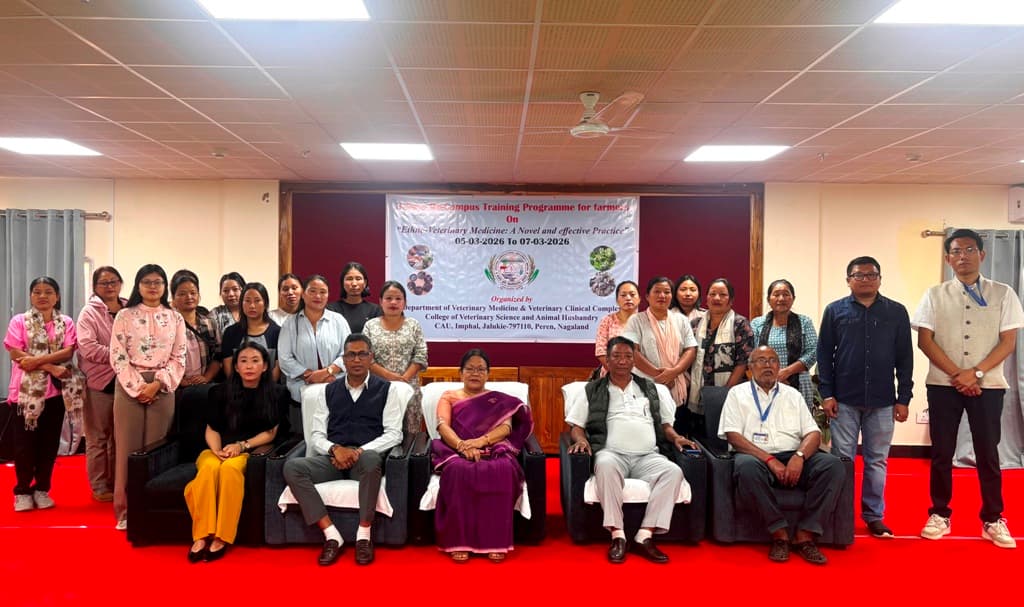
DIMAPUR — A three-day training programme on “Ethno-veterinary medicine: a novel and effective practice” commenced on Thursday at the College of Veterinary Sciences and Animal Husbandry (CVS&AH), Jalukie, in Peren district.
The programme is being organised by the Department of Veterinary Medicine in collaboration with the Department of Veterinary Clinical Complex, CVS&AH, and will continue till March 7.
According to a press release from the college, the training is being conducted for women animal owners, with 15 rural women participating.
Chief Veterinary Officer (CVO) of Peren district, Dr. Tsileu Haikube, who attended the inaugural programme as the special guest, encouraged the participants to adopt ethno-veterinary practices for treating animal diseases.
He noted that herbs are abundantly available in nature and urged the farmers to share and propagate the knowledge gained from the training with fellow livestock rearers.
Also read: No parking on NH-29 stretch from 3rd Mile to Chümoukedima on March 6
Dean of CVS&AH Jalukie, Dr. I Shakuntala, lauded the organising team for selecting an important theme for the training.
In her address, she highlighted the vital role played by women in livestock management and backyard farming. She also explained the usefulness of traditional and herbal medicines as cost-effective treatment methods for improving livestock health through alternative practices.
Dr. Shakuntala further appreciated the efforts of the resource persons—Dr. Gunjan Das, Dr. Keneisezo Kuotsu, Dr. W. Ramdas Singh, Dr. Imtiwati and Dr. Fr. Vilasal Godfrey Thappo—for their contributions and interactions with the trainees during the course of the programme.
Earlier, Professor and Head of the Department of Veterinary Medicine, Dr. Gunjan Das, who is also the course director, delivered the welcome address.
In his speech, he highlighted the harmful effects of antimicrobial resistance and drug residues, while emphasising the benefits of adopting alternative and herbal medicines in animal production systems.
The programme concluded with a vote of thanks delivered by Dr. Sashitola Ozukum, Assistant Professor (SS) at the Veterinary Clinical Complex and training coordinator.