


Discover simple entryway organisation ideas to reduce clutter, improve storage and create a comfortable, welcoming entrance that works every day.
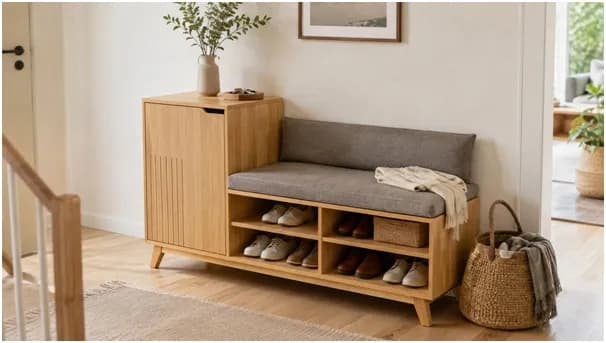
The entrance of a home can become untidy remarkably quickly. One pair of shoes is left near the door because someone will wear it again in the evening. Another pair appears after school. A delivery arrives, somebody drops their keys on the nearest surface, and a handbag stays on a chair for the night. By the next morning, the entrance is doing far more storage work than anyone planned.
The difficulty is that an entryway has to handle two jobs at once. People and belongings pass through it constantly, yet it also creates the first impression of the home.
Keeping it organised does not require filling the entrance with cabinets. A better approach is to notice what regularly gets left there and give those things simple, convenient places to go.
1. Why a Well-Organised Entryway Creates a More Comfortable Home
Coming home involves a small routine most of us barely notice. The door opens. Shoes come off. Keys are put down. A bag may be left nearby. Shopping or parcels might enter at the same time.
If none of these objects has a regular place, the entrance becomes their temporary home.
Shoes are usually the most obvious example. One pair near the door is rarely a problem. Several pairs spread across the floor can interrupt movement, particularly in a narrow entrance.
A designated shoe rack solves a very ordinary need: shoes have somewhere to go as soon as they come off.
The same principle works for keys and smaller belongings. If people naturally put their keys down immediately after entering, storage located near that point makes more sense than expecting everyone to carry them into another room.
Convenience matters because an organisation system that requires extra effort is less likely to survive everyday use.
Look at what your household already does when entering the home. Those habits provide useful clues about where storage should be placed.
2. The Everyday Entryway Mistakes That Lead to Unnecessary Clutter
One common mistake is planning the entrance for how it looks when everything has been put away. Real life is different.
There may be wet umbrellas during the monsoon, school bags arriving in the afternoon, shoes that need to be worn again shortly, and packages waiting to be opened. An entryway needs enough flexibility to handle these temporary situations without becoming permanently crowded.
Too much furniture can create another problem. A shoe rack, console, bench and separate drawer cabinet may each have a purpose, but together they can consume a surprising amount of floor area. In a compact entrance, people then have to move around the furniture before they have even entered the main part of the home.
Storage depth deserves attention too. A cabinet that projects too far into a narrow passage may hold plenty of things but make daily movement uncomfortable. Before purchasing one, mark its depth on the floor and check how much walking room remains.
Then look at the door. Can it open fully? Is there enough space for two people to enter together? Can somebody put on shoes without blocking the doorway?
These questions matter more than squeezing another storage section into the available area.
3. Building a Storage System That Simplifies Your Daily Routine
A useful entryway system starts with categories rather than furniture. List what regularly enters and leaves through the door.
For many households, shoes will be near the top. Then there may be keys, wallets, sunglasses, bags, helmets, umbrellas or other small belongings. Not every entrance needs storage for all of these things. Once the list is clear, deciding what furniture is required becomes easier.
For shoes, consider how many pairs genuinely need to remain near the entrance. Footwear worn occasionally may be better stored elsewhere rather than occupying the most convenient space every day.
People comparing wooden shoe rack design online options at Wooden Street can look at capacity, dimensions and the type of storage offered. Check the available entrance area first, particularly the depth. A rack that accommodates many pairs may still be the wrong choice if it makes the passage difficult to use.
Think about everyday access as well. Shoes worn regularly should be easy to reach. If retrieving a pair requires moving several others, the rack may soon stop being used as intended. The best storage systems usually require the fewest extra steps.
4. Choosing Smart Storage Solutions for a Cleaner and More Functional Entrance
Not everything near the entrance belongs in a shoe rack. Keys, receipts, spare change and other small items tend to collect on whatever flat surface is available. Left there long enough, they make even a reasonably tidy entrance look busy.
A drawer can be useful for these smaller belongings. It keeps them close to the door without leaving everything visible. The important part is deciding what the drawer is for before it gradually becomes home to unrelated objects from around the house.
Someone comparing Wooden Chest Of Drawers options at Wooden Street can consider size and placement alongside cost. A compact drawer unit may be enough if the purpose is simply to hold a few everyday belongings. There is little reason to introduce a large cabinet when the entrance only needs storage for small items.
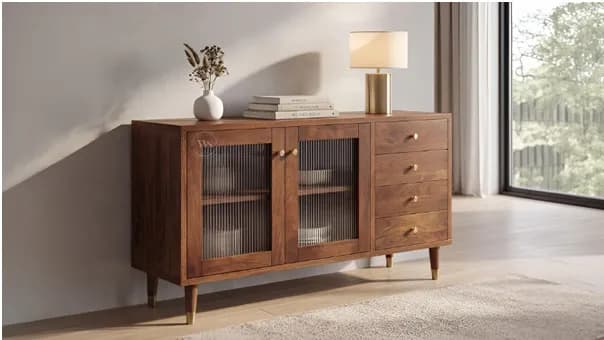
Furniture height also matters if the top will be used as a temporary surface. People may naturally place a bag, parcel or keys there while entering. That is fine. The problem begins when temporary items never move on.
Keeping part of the surface free makes the entrance easier to use without turning every arrival into another layer of clutter.
5. Simple Organisation Habits That Keep Your Entryway Neat Every Day
Even a well planned entrance can become messy if it turns into storage for everything that passes through it. A few ordinary habits can prevent that.
Keep only regularly worn shoes near the door. If a pair has not been used for weeks, it probably does not need the easiest position in the rack.
Empty the small item drawer occasionally too. Receipts, old keys and miscellaneous objects can accumulate quietly until useful storage becomes difficult to use.
Bags deserve similar attention. If a work or school bag is needed every day, assigning it a regular position makes sense. Bags used occasionally can stay elsewhere rather than competing for entrance space.
Temporary clutter should remain temporary. A delivery box can wait near the entrance until it is opened, but leaving it there for several days quickly changes how the whole area feels. The same is true of shopping bags and umbrellas that have already dried.
A quick look at the entrance at the end of the day is often enough. Put away what has wandered out of place and leave the area ready for the next morning. It should not require a full cleaning session.
6. Creating an Entryway That Feels Organised, Welcoming and Effortless
A useful entrance is not necessarily an empty one. Shoes will be there. Keys need somewhere to go. Bags occasionally arrive at the same time as parcels and shopping. The goal is to make room for those ordinary routines without allowing the entrance to become a general storage area.
Start with the things your household reaches for most often. Give frequently worn shoes an easy place to stay. Keep smaller belongings together rather than scattered across surfaces. Choose furniture according to the available passage width, not simply according to how much it can store.
Then resist filling every remaining corner. An entryway still needs room for people to enter, remove their shoes, carry bags inside and greet someone at the door. Open floor area is useful space too.
When storage follows the way people already move through the home, staying organised becomes much simpler.
That is what a comfortable entrance really needs: less searching, less stepping around things, and an obvious place for the belongings that come and go every day.