[caption id="attachment_207420" align="aligncenter" width="565"]
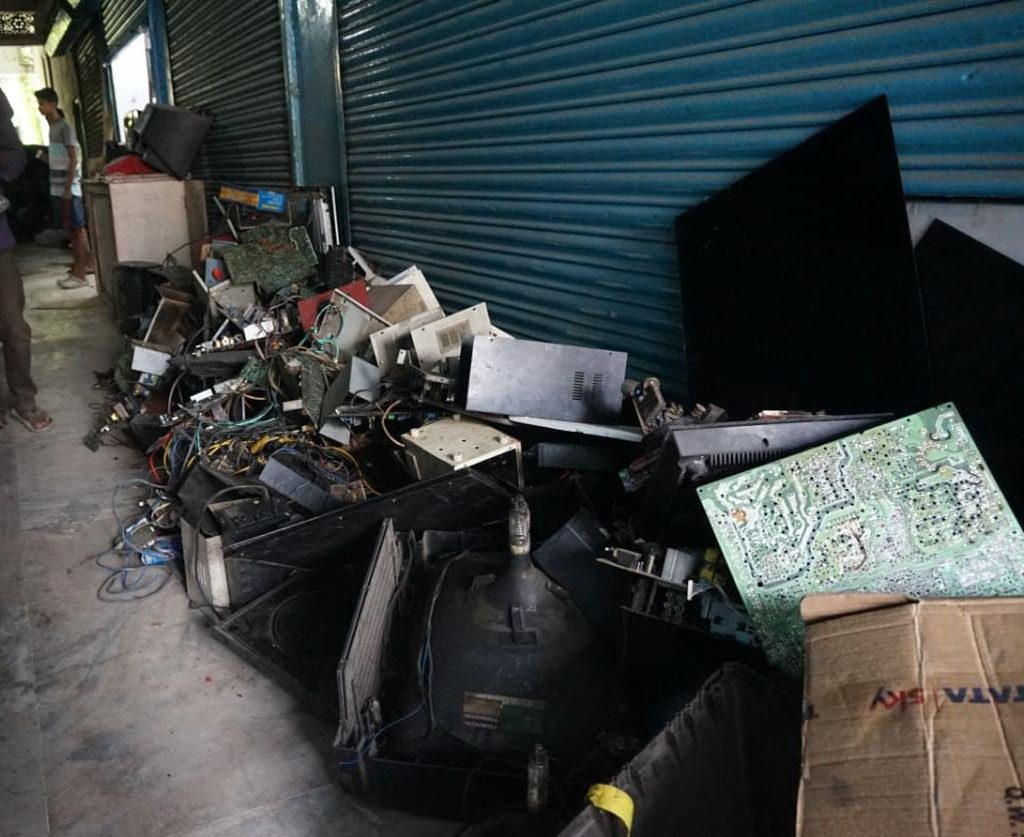 A portion of e-waste collected from a single repair shop in Dimapur. .
[/caption]
Eastern Mirror Desk
Dimapur, Sep. 18: The first ever e-waste collection centre in Nagaland, e-CIRCLE, was officially authorised (as functional) on September 17, in Dimapur by the Nagaland Pollution Control Board (NPCB).
E-waste, also known as waste electronic and electrical equipment (WEEE), comprises of electrical appliances or accessories whole or in part that are rejects from its manufacturing or repairing process; intended to be discarded due to malfunction; outdated and obsolete.
The e-waste collection centre, e-CIRCLE is the brainchild of three friends, Awa, Sowete and Deitho whose main objective is to make it as social entrepreneurs by collecting e-waste from Nagaland and sending it for recycling to different cities in India.
“We started a few months ago and there are certain rules and regulations to follow for waste management according to the NPCB, which e-CIRCLE did,” Awa said in a telephonic interview with
Eastern Mirror.
Awa also informed that she along with Sowete took a solid waste management internship with Mott MacDonald in Shillong, which is also the acting consultant for Shillong Municipal Board.
She said that e-CIRCLE visited local repair shops and scrap dealers around Dimapur to attain as many as the e-waste lying around in the commercial hub.
“We learned that many people leave their electronics to be fixed at the repair shops but never return to pick it up after repairing,” said Awa adding that the non-Naga repair-shop owners were fearful of selling the electronic wastes to them in case the owner returns even though they have been lying abandoned for months, and some even years.
She also revealed that while they are also buying the e-waste and electronic scraps, they are also paying for transporting the waste to Kolkata and hopes to send it across to other authorised recycling companies in India.
At present e-CIRCLE is working with Hulladek Recycling Pvt. Ltd in Kolkata, which is an authorised management centre of electronic waste, with the consent of West Bengal Pollution Control Board.
“We are just the collection centre and we are recycling through Hulladeck for which we have to send around 2-3 tonne of e-waste after collection and transport it,” said Awa. The collection centre is located at Diphupar-B.
According to a recent study by the Associated Chamber of Commerce and Industry in India (Assocham) NEC, the global volume of e-waste generated is expected to reach 52.2 million tonnes or 6.8 kg per inhabitant by 2021 from 44.7 million tonnes in 2016 at a compound annual growth rate of 20%.
The study also revealed that India generates about ‘2 million tonnes per annum (TPA) which makes it the 5th largest country generator of e-waste in the world with up to 4, 38,085 TPA recycled.’
Some states like Karnataka has 57 units with a capacity to process nearly 44,620 tonnes; Maharashtra has 32 units that can process 47,810 tonnes; Uttar Pradesh has 22 units to process 86,130 tonnes; Haryana has 16 units to process 49,981 tonnes. Tamil Nadu has 14, 52,427 metric tonnes per annum (MTA), Gujarat has 12 units (37,262) whereas Rajasthan has 10 units (68,670) and Telangana has four units to process 11,800 MTA respectively.
While authorising the centre to function, Aghali Swu, the Assistant Environment Engineer of NPCB, Dimapur emphasised on Rule No. 6 of the E-Waste (Amendment) Rules, 2018 which states the responsibilities of a collection centre.
Under this rule it is mentioned that the e-waste must be collected and stored on behalf of the dismantler, recycler and refurbisher (sic) and ensure that all the facilities of the collection centre is in accordance of the standards and guidelines of the Central Pollution Control Board. She also added that e-waste must be handled in an environmentally sound manner, ensuring that all proper steps are taken to protect health and environment against any adverse effects, which may occur from e-waste.
‘The rule mandates consumers to dispose off their e-waste only through authorised recyclers; that the state government has to ensure the safety, health and skill development of the workers involved in the dismantling and recycling operations.’
Further urban local bodies, like DMC, are assigned the duty to collect and channelise the orphan products to authorised dismantler or recycler.
The Assocham NEC study also reports that the current rate of e-waste generation in India is 4.56 times greater than the annual e-waste processing capacity offered by the nation, which leads to improper and illegal dumping/ disposal of the hazardous e-waste, which further leads to environmental and health hazards.
“High and prolonged exposure to these chemicals and pollutants emitted during unsafe e-waste recycling leads to damage of nervous systems, blood systems, kidneys and brain development, respiratory disorders and many others,” Awa informed.
The e-CIRCLE team has been reaching out to different offices, institutions and dealers who are bulk consumers of e-waste and sensitising them about the harmful effects of improper disposal of e-waste and the need of recycling it for the betterment of one’s health and environment.
Any persons or offices willing to donate/sell their e-waste for recycling can contact e-CIRCLE and the team will carry out door-to-door pick up. The team can be reached at their Facebook page ‘e-CIRCLE’ or mail to e-circle2018.com.


