


Dzükou Valley wildfire enters fourth day; 20 trekkers evacuated, trekking restricted, IAF helicopters to assist containment efforts.
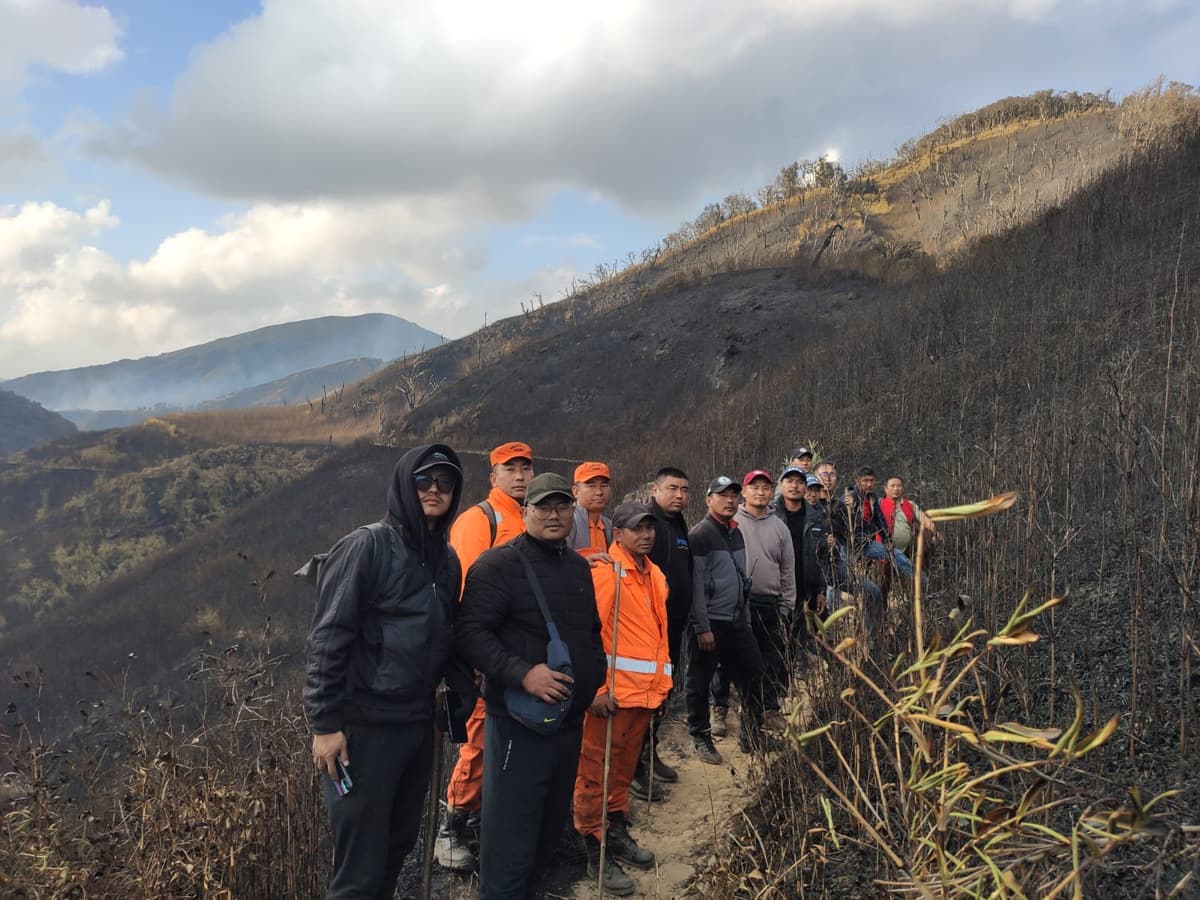
KOHIMA — The wildfire at southern Dzükou Valley entered its fourth day on Thursday, with Deputy Commissioner of Kohima, Henok Buchem, stating that the blaze remains concentrated around the Dzükou helipad and has caused extensive damage.
He said that on Thursday, the surveillance team—led by SDO Civil Jakhama Vineikho and Woenthung, District Commandant HG & CD, along with SDRF personnel, police, DBs, drone pilots, NSDMA operators, and SAYO volunteers—monitored and assessed the situation. An evening review meeting was held at the DC’s residence.
The DC added that the team will continue monitoring the site and that IAF helicopters will commence bucket operations (Bambi Bucket) on Friday.
Also read: Dzükou Valley fire spreads uncontrollably, trekking suspended
In addition to Padampukhuri Lake, Nsonji Lake in Tseminyu district has been identified as another water source, with a No Objection Certificate obtained from the Tseminyu district administration.
SAYO president Zaseitsolie Beio told this newspaper that in Mt. Tempü area, everything has burned and there is no more smoke. On the Jakhama route, where fire was reported yesterday, only the bamboos were burned, and the fire has been contained. Around the helipad, about 70% of the fire is under control, while 30% continues to burn.
He added that the team conducted an aerial survey on Thursday and will visit the site again on Friday, when Bambi bucket operations will begin to contain the remaining fire. He expressed hope that the blaze could be fully controlled by tomorrow.
The DC also reminded that trekkers will continue to be restricted until the fire is fully controlled, after which an official statement will be issued. He appealed to everyone not to venture into the valley without SAYO’s guidance during the ongoing emergency.
He further informed that around 20 trekkers were evacuated on Wednesday evening from the Dzükou Valley by SDRF and SAYO volunteers.