


DUCCF urges 23 Dimapur ward councillors to address civic issues while opposing proposed sanitation and electricity tariff hikes
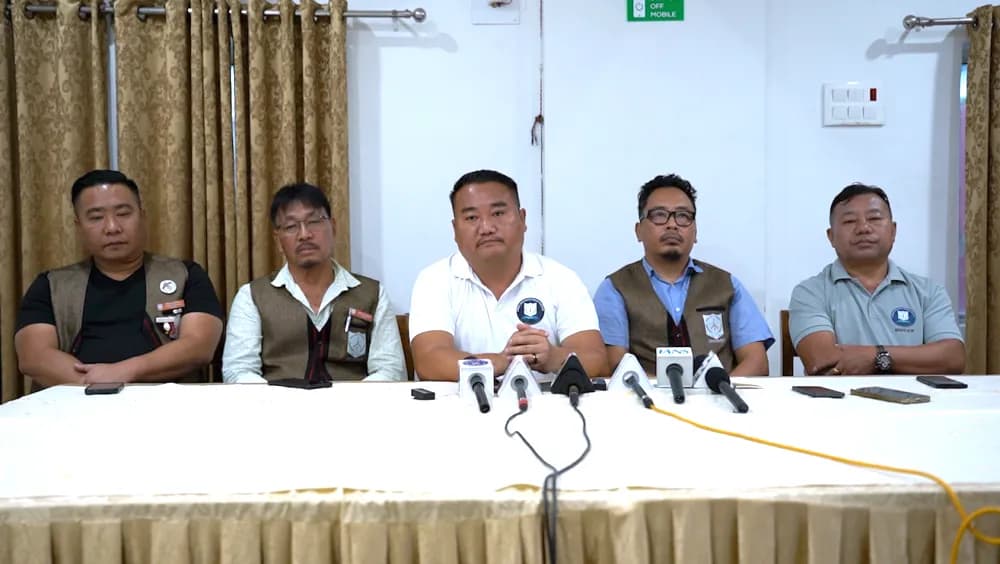
DIMAPUR — The Dimapur Urban Council Chairmen Federation (DUCCF) on Wednesday urged the city’s 23 elected ward councillors to take active responsibility for civic issues in their respective wards, while opposing proposed hikes in sanitation fees and electricity tariffs and reiterating its demand for repeal of the Nagaland Liquor Total Prohibition Act (NLTP Act).
Addressing the media in Dimapur, DUCCF president Zasivikho Zakiesato called on councillors to be visible and accountable, particularly in addressing solid waste management.
He maintained that waste segregation should begin at the colony level through house-to-house sensitisation involving councillors, schools, institutions and government offices, rather than relying solely on gaon buras, colony chairmen or segregation plants. “While machines are important, public awareness is the first step,” Zakiesato said.
The federation asserted that solid waste management should be implemented in accordance with the Solid Waste Management Rules, 2016, and said councillors should take responsibility for compliance in their respective wards.
Also read: Nagaland: High Court sets August 19 hearing on Indigenous status PIL
Nagaland: ANCSU opposes PhD criteria dilution, blanket regularisation of lecturers
The DUCCF informed that it had met the deputy commissioner and officials of Urban Development, Dimapur Municipal Council (DMC), East Dimapur Town Council, chief medical officer and PHED, and expressed willingness to cooperate with the administration on civic issues.
It also stressed the need for closer monitoring of biomedical waste from hospitals and other health facilities.
Opposes fee hike
DUCCF vice president Vikheto objected to the DMC’s proposal to increase residential sanitary fee from INR 80 to INR 100, saying the council should have consulted gaon buras and colony chairmen before proposing the hike. He said waste collection remained irregular in several colonies, with collection vehicles sometimes failing to visit even once a week.
WATCH MORE:
Increasing the fee without improving the service would be unjust, he said, urging the DMC to reconsider the proposal.
The federation also opposed reports of another electricity tariff increase, citing frequent load shedding and alleged use of substandard electrical materials. Vikheto questioned the rationale for increasing tariffs when consumers continued to face service disruptions and urged the department to ensure quality materials and reliable supply.
On prepaid smart meters, DUCCF joint secretary Kahuka Sema said the federation had recommended that prepaid meters first be installed in government offices, institutions and commercial establishments.
It also called for upgrading transformers, cables and poles and allowing domestic consumers who prefer postpaid connections to retain them. The federation claimed that the introduction of prepaid meters had helped eliminate 95% to 98% of illegal power hooking in Dimapur, but said many domestic consumers still needed time to adjust to the system.
The DUCCF also raised concerns about voltage fluctuations damaging household appliances and alleged that some officials had threatened disconnection and withholding of electrical infrastructure from consumers unwilling to install prepaid meters.
NLTP repeal
On the NLTP Act, Zakiesato said DUCCF’s position remained unchanged and that the federation would continue seeking its repeal. He argued that Dimapur’s proximity to Assam and the continued availability of illicit liquor had contributed to an unregulated parallel market.
He clarified that the federation was not promoting alcohol consumption, but favoured regulation through designated outlets, restricted operating hours and strict rules.
Vikheto said the federation planned to seek a meeting with the state government to pursue the matter, while its petition to the governor remained pending.