[caption id="attachment_252306" align="aligncenter" width="500"]
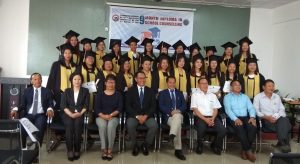 Resource persons and the first graduating batch of Nagaland SCERT’s nine-month diploma in school counselling, at the certification ceremony, on June 1 in Kohima.
[/caption]
Our Correspondent
Kohima, June 1 (EMN): In 2018, the Nagaland State Council of Educational Research & Training (SCERT) became the first school institution in the country to introduce a 'school counselling diploma.' After nine months, 24 students have graduated. They were certified at a ceremony, at the SCERT, on June 1 in Kohima.
The graduates, 23 women and a lone man, became the ‘first ever graduate batch’ of the nine-month diploma.
Also, the second batch comprising 45 trainees was inducted during the graduation ceremony.
The director of the SCERT T Sekhose said during the event that the course involved much planning. ‘Today we see the fruition of the effort. Although the number of graduates may not be impressive, the quality is definitely worth it,' he asserted. He was of the view that the graduates will be making an 'impact in their respective domain,' and 'steer others in the right path.'
Speaking about the importance of counselling, Sekhose called it ‘one of the most important requirements.’ In fact, he said, 'education is not only academics but also of spirit, soul, and body.' The course emphasises on the practical rather than theory, he said.
Also addressing the graduates was the advisor for Information and Public Relations, Toshi Wungtung. He said they were going beyond, and towards “total integration.”
‘You are taking the young minds beyond knowledge, competition, classrooms, and mechanical institutions,’ he asserted. The advisor called them “builders of the society,” and encouraged them to 'bring out the inner self in a person.'
‘You are all a young scientists today as you’ll be taking forward the minds,’ he said.
Talking about the significance of counselling, Wungtung said it was a ‘very integrated approach’ as it talks about a total character and building of a person. Perhaps, he opined, it is a long term investment of minds to look beyond.
Calling counselling a ‘daily project,’ he urged them to be conscious, alert, and focused at all times. He expressed belief that the project would contribute to a better society.
Dr. Zavise Rume, an associate professor and nodal officer for the guidance and counselling cell of the SCERT, Nagaland gave the concluding remarks. ‘For a little more than 20 years, we have been trying to bring up this course,’ he said.
The department will try to bring three to four resources persons from abroad this year, he informed.
Stating that the department is trying to upgrade the programme, he expressed an aspiration that Nagaland will become a 'state of counselling.' The state needs more policy, research training, and counselling, Rume said.
Technically, graduates are certified but it all comes down to the person’s attitude and knowledge, he said. The official urged them to continue to learn, meditate, internalise, and put their learning to use. Be useful to the society, he advised the graduates.
Being a Christian state, he added, ‘it is our responsibility to create inner peace and mind in the people.’
Loreni Humtsoe, who spoke on behalf of the graduates, said that the course was “hectic” yet “very interesting.”
The approach and methodology the course used is “quite different” and professional, she explained.
Humtsoe went on to explain that the course included dimensions of personal-social development, academic development, and career development.
Throughout the course “self awareness” was the greatest learning experience to her. She added that more than 20 resource persons trained them.
The principal secretary of the School Education department, Menukhol John, also addressed the ceremony briefly. He expressed support to students in the new batch, and wished them the best and further learning.
The course is designed to train school teachers in basic counselling.


