


Dimapur reviews NIPUN Bharat Mission implementation to strengthen foundational literacy, numeracy and education coordination.
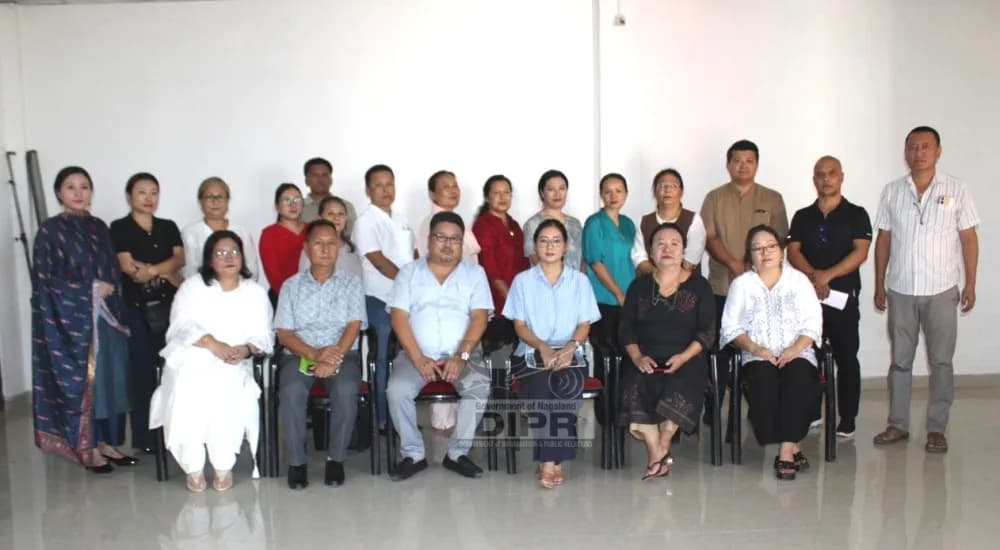
DIMAPUR — A coordination meeting to review the implementation of the National Initiative for Proficiency in Reading with Understanding and Numeracy (NIPUN Bharat) Mission was held at the Deputy Commissioner’s Office, Dimapur, on October 12.
The meeting, chaired by Additional Deputy Commissioner (ADC) Dimapur Dr. Diana Patton, discussed strategies to strengthen foundational literacy and numeracy, formulate evaluation plans and improve coordination among district-level stakeholders, a DIPR report stated.
She highlighted that NIPUN Bharat was launched by the Ministry of Education, in July 2021, with the aim of ensuring universal Foundational Literacy and Numeracy (FLN) for every child by the end of Grade 3 by 2026–27.
The mission covers children aged three to nine years, from Balvatika to Grade 3, and focuses on developing essential reading, writing and numeracy skills during the foundational years of education.
A PowerPoint presentation highlighted the importance of FLN, Early Childhood Care and Education (ECCE), and teacher training.
It also outlined Vidya Pravesh, a three-month, play-based school preparation module developed by the National Council of Educational Research and Training (NCERT) to facilitate a smooth transition to Grade 1 through games, stories, songs and interactive activities.
Read more local news: Hornbill Festival preparations on track; road conditions to be reviewed
The presentation further covered Vidya Samiksha Kendra (VSK), a technology-enabled platform for monitoring school, teacher and student data to identify learning gaps, track attendance and improve educational outcomes.
The digitisation of Holistic Progress Cards and academic records was also discussed.
During the meeting, participants discussed the inclusion of private schools in the programme, noting that the matter involved a policy decision and would be compiled for further consideration by the state government.
The meeting also deliberated on formulating evaluation plans at both state and district levels.
It was suggested that the district develop a suitable plan based on its specific requirements rather than relying entirely on the framework provided by the state government.
The involvement of non-governmental organisations (NGOs) associated with the education sector was also discussed as a means of strengthening the implementation process.
Participants emphasised the need to clearly define the roles and responsibilities of district-level stakeholders. Further deliberations on the matter were proposed for the next meeting.