


Dimapur residents flag waste management, water conservation and urban planning gaps at a workshop on the city’s future
DIMAPUR — A decade ago, a shop in Dimapur sold about 40 air conditioners in an entire season. Today, it can sell 100 in a single day. But as the city expands, residents say its civic infrastructure and environmental safeguards have struggled to keep pace.
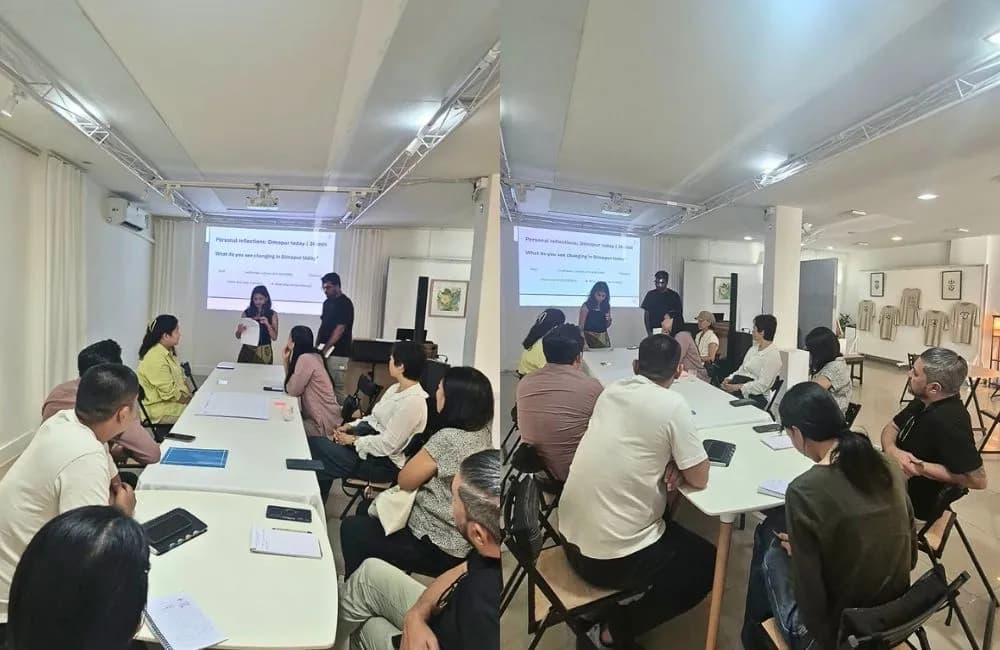
The contrast emerged at a workshop titled “The Future of Himalayan Towns and Cities” held at Tia Ki in Dimapur on October 24, where participants reflected on how the city has changed and what it should look like in 2040.
Residents recalled streams that once served as places for children to spend their leisure time but have since become drains, with toilets connected to them. Others pointed to mounting plastic waste, disappearing water bodies and a lack of public ownership of shared spaces.
The workshop was organised by Transitions Research as part of its project, “The Future of Himalayan Towns and Cities — Journey through the Himalayas”, supported by Royal Enfield. The initiative is examining how towns and cities across the Himalayan region could evolve over the next 10 to 15 years, with Dimapur among its locations alongside Almora, Dharamshala and Guwahati.
Also read: Nagaland among states flagged over biomedical waste disposal lapses
Can Black Soldier Fly larvae help Dimapur tackle its waste problem?
Parul Anand, an AI and Society Associate with the project, said the exercise was intended to help communities articulate what they wanted their cities to become before deciding how to address existing problems.
Participants identified waste management, water conservation, urban planning, public transport and green spaces as key areas requiring attention. They also raised concerns over fragmented civic governance and the absence of a heat-specific action plan for the state.
Boka Rochill, Chief Climate Action Officer at Nagaland Climate Centre for City Investments to Innovate, Integrate and Sustain (CITIIS), said Dimapur needed a more coordinated approach to urban governance.
“The kind of authority that the Municipal Council should have is not established yet,” he said, adding that municipal elections had taken place after almost two decades and that the city needed a clearer administrative structure and a proper heat action plan.
Adrian M Mahung, a waste management consultant for Dimapur Municipal Council, said the nature of waste generated in the city had changed, with plastic posing a major challenge. He cited inadequate collection vehicles, gaps in waste collection at marketplaces and the absence of clearly designated waste collection and segregation points.
He also raised concerns about the impact of dumping on water quality, saying that waste management practices needed to become more efficient as the city grew.
Mhonjan Humtsoe, president of Team Better Dimapur, said public awareness of environmental issues had improved, with the group growing from 13 volunteers to around 500. However, household waste segregation remained weak, he said, with many residents relying on municipal collection instead of managing waste responsibly at source.
“People used to manage waste on their own earlier but with the introduction of house-to-house waste collection, people are becoming lazy and dependent on the municipal to even segregate wastes. Just making rules is not working; it needs to be implemented,” Humtsoe said.
Participants also spoke of a lack of collective responsibility for the city, despite the growth of businesses and commercial activity. They said environmental awareness needed to translate into everyday practices, including waste segregation and the proper disposal of plastic.
Entrepreneur Nengneithem Hengna said rising incomes and an expanding social and cultural calendar had brought changes to people’s lives, but celebrations and public events also needed to be more environmentally conscious.
Looking ahead to 2040, participants envisioned a cleaner, greener and more accessible Dimapur, with pedestrian-friendly streets, reliable public transport, more parks and green cover, rainwater harvesting, recycling facilities and better waste segregation. They also called for improved mobility, eco-friendly buildings and stronger protection of local water bodies.
Participants proposed designated fabrication workshops, experiential tourism and stronger handloom and handicraft industries, alongside support for locally made products and a monitoring mechanism to ensure their authenticity.
The project’s findings are expected to inform Royal Enfield’s “Journeying Across the Himalayas” festival in December, as well as policy recommendations on the future of Himalayan towns and cities.