Delimitation based on population will be injustice to southern states: Kharge
Congress president Mallikarjun Kharge on Sunday said that if the delimitation exercise is based on population, it will be an injustice to the southern states as it would reduce their representation in the Lok Sabha
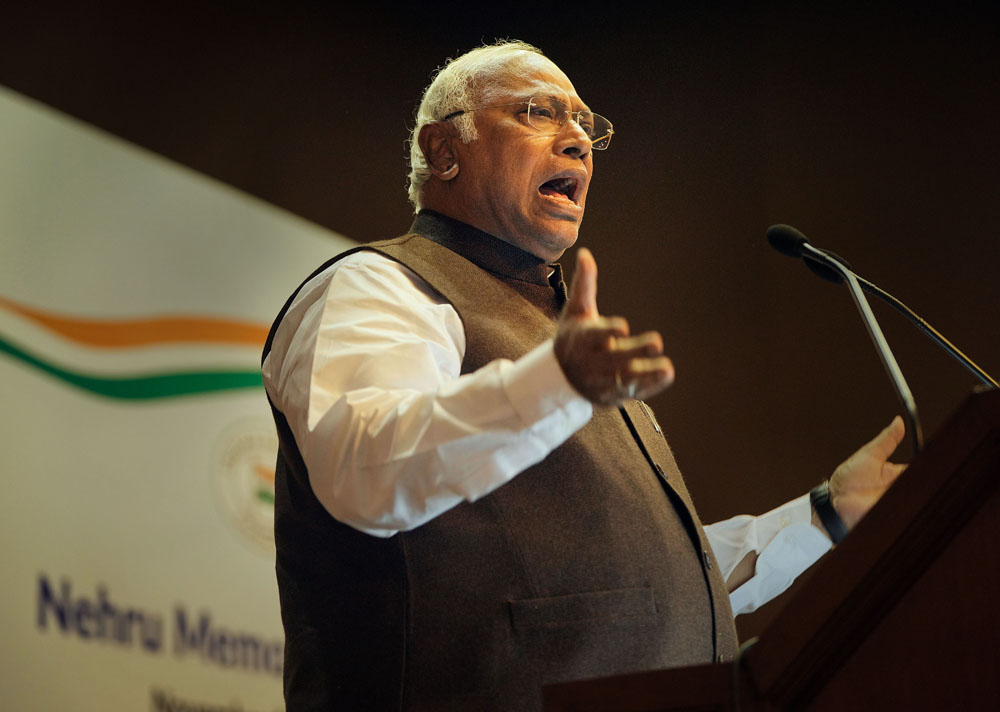
- GADAG (KARNATAKA) — Congress president Mallikarjun Kharge on Sunday said that
if the delimitation exercise is based on population, it will be an injustice to
the southern states as it would reduce their representation in the Lok Sabha
and urged people to unite against this "injustice."
-
- Speaking at the centenary celebrations of the late K H
Patil, a former minister, he also criticised the central government, expressing
concern over the alleged lack of emphasis on education and the large number of
vacancies in educational institutions.
-
- "The central government talks about cooperative
federalism. If there is cooperative federalism, why are people not receiving
the funds they are entitled to? Are cooperatives in Karnataka getting the money
they should from the National Bank for Agriculture and Rural Development
(NABARD)? It has decreased by 58 per cent," Kharge said.
-
- Addressing the gathering, he urged the people of Karnataka
to unite and fight against the injustice being done to them.
-
- "When the issue concerns Karnataka and its development,
everyone should speak in unison," he said.
-
- "Delimitation based on population is being planned,
through which efforts are being made to reduce the number of parliamentary and
legislative assembly seats in South India," Kharge stated, adding that in
the northern states, representation is expected to increase by 30 per cent.
-
- "Such reports are emerging, and we should wait and see.
If this happens, it will be an injustice. We must unite against this
injustice," he added.
-
- Accusing the union government of interfering in various
institutions, the AICC chief said that the education sector is not receiving
the importance it deserves.
-
- Alleging a reduction in central funding for education, he
said, "The number of vacancies that should be filled, the number of
teachers who need to be appointed—whether in Navodaya schools, Kendriya
Vidyalayas, or universities—50 per cent of these posts remain vacant."


