[caption id="attachment_193069" align="aligncenter" width="565"]
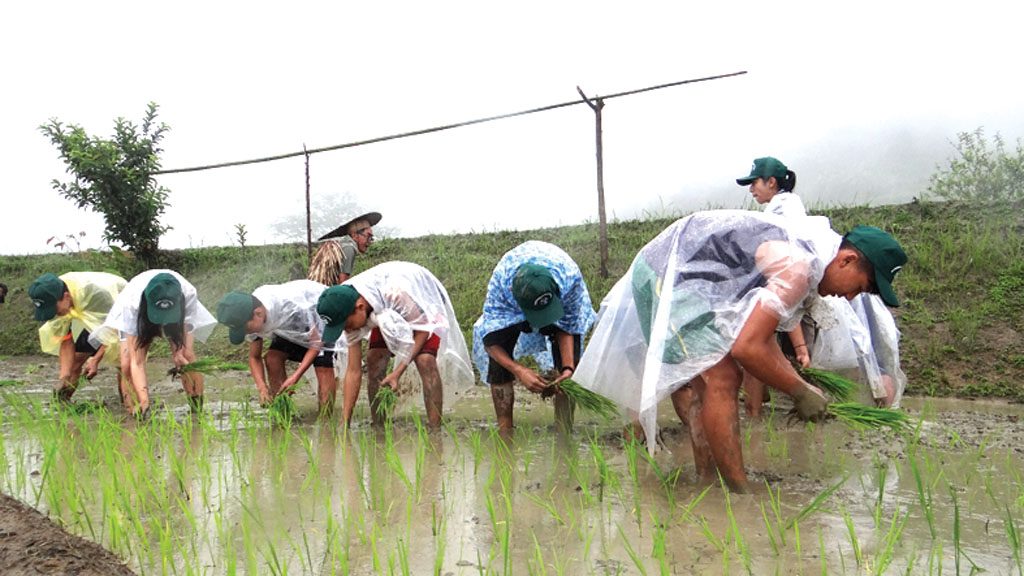 Particpants of the NEN Summer Farm School at Chizami village in Phek district.
[/caption]
Dimapur, July 3 (EMN): The Northeast Network (NEN) successfully held its third annual ‘NEN Summer Farm School (SFS)’ at Chizami village in Phek district from June 27 to July 2 2018 on the theme ‘Bridging the Farm-to-Plate Gap’.
A press release received here at Eastern Mirror informed that the main objective of the SFS is to connect urban-based students with local food and farming systems through an experiential learning module. “It also aims to bridge the traditional knowledge gap on sustainable food systems and make students understand the process from food production to consumption,” stated the release.
The students who attended the camp, according to the release, had nice things to share about their stay and knowledge gained:
“The experience at the SFS is amazing. I realised the beauty of nature and the importance of everything around us in Chizami. It was my first time experience transplanting paddy in the terrace fields. A visit to the jhum fields is a walk to remember’ shared Hazel Odyuo, a student of Livingstone Foundation Hr. Sec. School, Dimapur.
“The best thing during the camp was the quiet time, from which we learnt that we should give time to ourselves, listen and know what nature want from us” the release quoted Vizotuonuo Kelelie, a student of Mt. Hermon Hr. Sec. School, Kohima.
“Because of this summer camp, I am a lot more inspired by nature. Now I have become more interested in exploring nature and its benefits,” noted Kuthovezo Medeo, a student from Baptist High, Kohima.
Guest speaker at the valedictory programme was Executive Director of CWWS, Vechulou-u Kanuo, who emphasised on the importance of growing one’s own food that is free from chemicals in order to stay healthy and live long. She quoted the Japanese phrase ‘chemical is war, organic is peace’ and therefore encouraged the students to ‘recognise, respect and love the farmers for their contribution to food production’.
“Unless we have farmers to grow food and rear livestock, we, the consumers even if we have enough money will not sustain,” the release quoted the CWWS Executive Director.
Seno Tsuhah, NEN in her concluding remarks motivated the students to ‘translate their learning into action’ back in their homes and schools. She expressed her happiness to hear that 50% of the students have pledged to start a backyard garden in their homes. Others pledged to decrease the buying and consumption of junk food, spread awareness on harmful effects of chemical use and promote organic farming, start a mini bee farm, document the edible plants in their areas and spread awareness on its conservation, amongst others.
SFS students presented their experiences and learning through skit, music, poetry reading, poster exhibition and speech. Participation certificates were given away by Vechulou-u Kanuo, Andrew Ahoto, Chairman LFHSS, Zulhipe Chirhah and Mhetshelo T.Kapfo, Sub-Inspector of Schools.
The 6-day school covered topics of Ecology and food chain, pollinators, jhum farming, terrace rice farming, homestead gardening, biodiversity walk and foraging wild edible plants, organic food production and consumption, community living and culture. Twenty-two high school students from 6 educational institutions in Kohima and Dimapur participated in the SFS 2018. Resource persons include Custodian farmers and community knowledge holders from Chizami namely
Zulhipe Chirhah, Khenemvu L.Mero, Mesilhi-u Akami, Dikhwetsou Wezah, Tasetshulou-u Kapfo and Kezukha-u Wezah; Dr. Samhita Barooah, Freelance researcher and writer, Khuvoi Vese, NBHM, Dr. Esther Longkumer, ACTO Soil, KVK-ICAR, Wetshete Thopi, Lecturer, Kilentola Jamir, Teacher and Volunteer IoFC, and NEN members, the release further added.


