


A two-day Community First Responder training programme began in Mokokchung with 25 trainees.
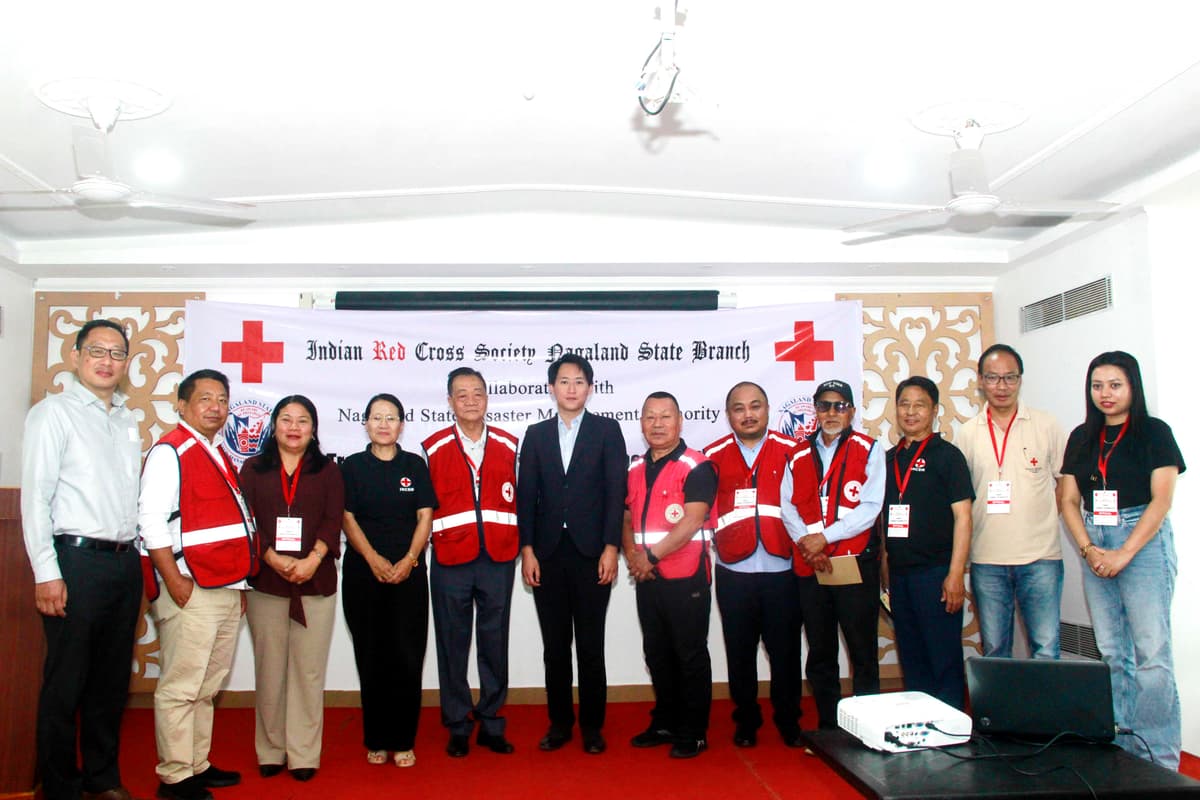
MOKOKCHUNG — A two-day intensive training programme on Community First Responder (CFR) commenced at the Whispering Winds Conference Hall in Mokokchung on Wednesday, with 25 trainees participating in the event.
The training is being organised by the Indian Red Cross Society (IRCS) Nagaland State Branch in collaboration with the Nagaland State Disaster Management Authority (NSDMA).
Addressing the gathering, General Secretary of the IRCS Nagaland State Branch Akhale V Khamo stated that the role of the Red Cross has expanded significantly beyond its original mandate of providing protection and assistance during wartime.
Also read: Centre approves forest land diversion in Chümoukedima for 220KV power line
She noted that the organisation is now required to deliver humanitarian support not only in times of conflict but also during disasters, crises, and emergencies. Khamo encouraged participants to register as lifetime members to become active volunteers and highlighted youth involvement as a key priority.
Honorary Secretary of IRCS Mokokchung Dr. SS Akaba described the programme as vital life-saving training. He pointed out that the role of CFRs has become crucial in providing immediate emergency aid to casualties before professional medical teams arrive at the scene. He urged the trainees to absorb basic first aid skills to respond effectively during emergencies.
Representing the district administration, Extra Assistant Commissioner of Mokokchung Neithozo Theunuo explained that the core objective of the CFR training is to prepare individuals who can respond swiftly during the critical "golden hour" in any medical, disaster, or crisis situation.
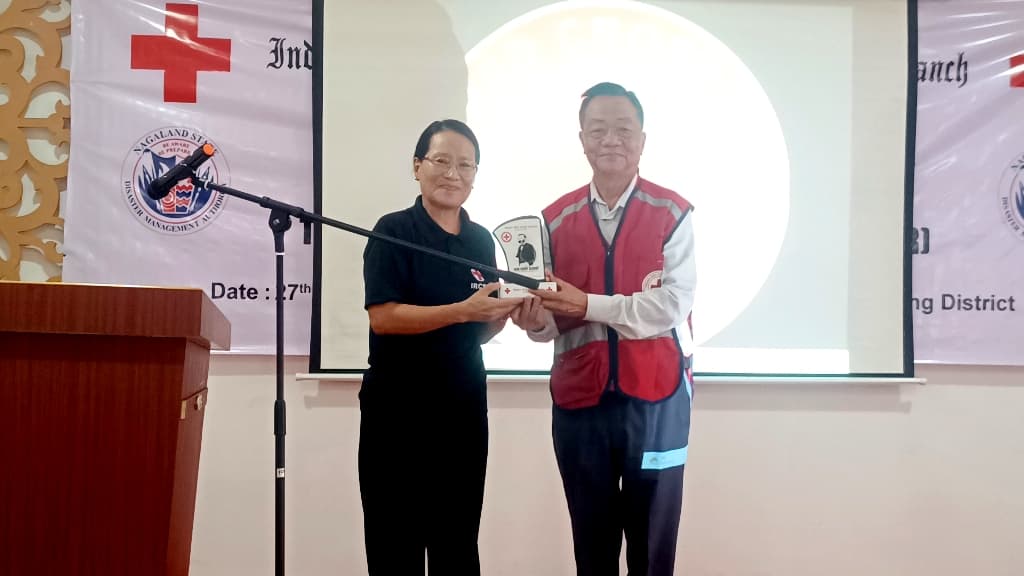
He told the trainees that the skills they acquire would not only help save lives but also instil public confidence that capable individuals exist within the community who know how to act during emergencies.
Theunuo appealed to the participants to pay full attention, internalise the knowledge, continuously upgrade their skills, and pass on the life-saving information to others in the community.
The programme includes practical sessions on essential topics such as cardiopulmonary resuscitation (CPR), choking, fractures, wounds and bleeding, dressing and bandaging, heart attack, cardiac arrest, disaster preparedness, blood donation, recovery position, and casualty transport.