


Kohima District Committee reviewed progress on EMRS projects at Chiechama and Botsa, with completion targeted by 2027.
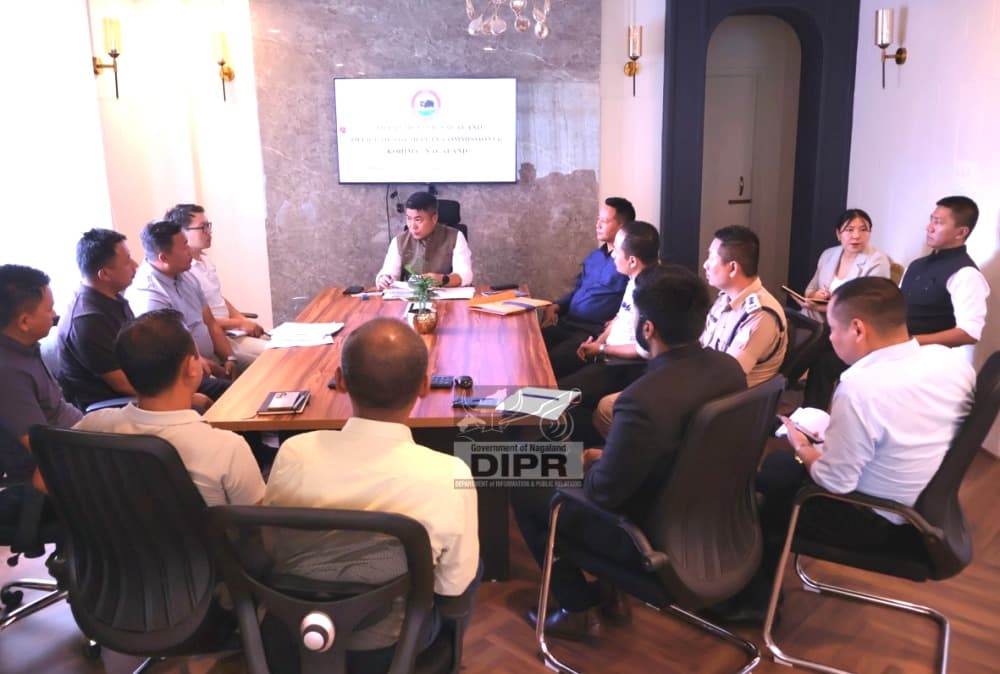
DIMAPUR — The District Committee on Eklavya Model Residential Schools (EMRS) reviewed the progress of the EMRS projects at Chiechama and Botsa during a meeting held on Thursday at the Deputy Commissioner’s office in Kohima.
The meeting was chaired by Deputy Commissioner B Henok Buchem and convened in accordance with directives issued by the National Education Society for Tribal Students (NESTS) under the Ministry of Tribal Affairs.
According to an official bulletin, representatives from the district administration, police, line departments, and the Tribal Affairs department attended the meeting to assess the status of the ongoing projects and address critical infrastructure requirements.
During the review, the committee discussed key infrastructure needs for the Chiechama EMRS project, including the construction of a two-kilometre approach road from the highway, power connectivity, and the provision of a piped water supply.
Read more local news: VB-G RAM G to strengthen rural livelihoods in Nagaland — Thavaseelan K
DISHA reviews implementation of central schemes in Chümoukedima
For the Botsa EMRS project, members focused on water connectivity and evaluated the overall progress of construction work.
The review revealed that the Chiechama EMRS project has achieved 62.3 per cent physical progress, while the Botsa project currently stands at 21.47 per cent completion. Both residential school projects are scheduled to be completed by 2027.
The deputy commissioner urged all concerned departments to maintain close coordination and cooperation to ensure that the projects are completed within the stipulated timeframe.
Buchem emphasised that timely completion would enable students to benefit from the educational facilities and infrastructure at the earliest.
The Eklavya Model Residential Schools initiative aims to provide quality education and modern residential facilities to tribal students, contributing to improved educational opportunities and overall development in the region.