


Our Correspondent
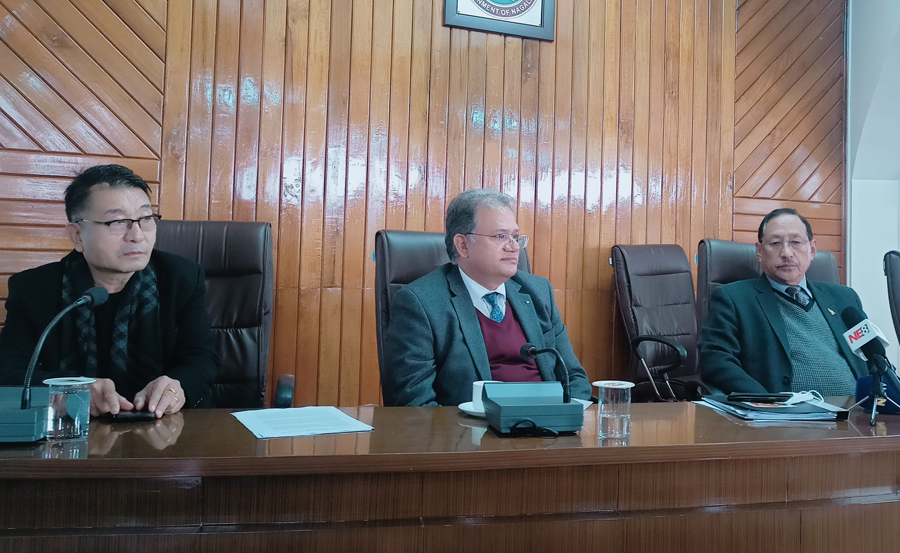
Kohima, Feb. 24 (EMN): The committee constituted to study issues relating to implementation of the Nagaland Liquor Total Prohibition (NLTP) Act 1989 had a consultative meeting with the stakeholders including representatives from churches, tribal bodies, and civil society organisations at Nagaland Civil Secretariat Conference Hall on Thursday.
Advisor of Sericulture, Excise and Minority Affairs, Zhaleo Rio told journalists that the meeting was cordial, frank and pragmatic despite difference of opinions.
The house viewed that if implementation of total prohibition is a failure, two options were avaible- ‘if there is any scope to revisit the NLTP, it should be reviewed and implemented effectively; to take into consideration the ill-effects of adulterated and spurious liquor and the problems faced in the hand of bootleggers, syndicate suppliers of alcohol and anti-social elements’, Zhaleo informed.
He added that most representatives were of the view that if at all the government takes any decision, it should not be partial lifting but total lifting.
The advisor stated that ‘eventually the committee will have to undertake a study,’ adding that many stakeholders had submitted their written statement, which will be examined and the findings submitted for recommendation to the government.
He, however, asserted that there is no specific timeline, except to submit the report as early as possible.
The Committee to review NLTP Act, 1989 was formed in 2018 to examine all health issues confronting the people; to research consumption of liquor in all the towns in the state and study the income generation of the state by comparing with the other north-eastern states, Zhalio said.
He also pointed out that the Health department along with food safety authority had also examined the quality of alcohol and a report was presented during the Thursday's meeting. He informed that out of 30 odd samples collected, 28 were found to be adulterated.
The department of Excise also gave a presentation on revenue and other aspects during the meeting. The advisor asserted Nagaland needs to generate revenue and also provide more employment avenues.
He stated that churches were concerned about the spiritual and overall health of the people and the government was also concerned about the people relating to overall development -- infrastructure, livelihood, economy of the people, and employment. He maintained that churches and the civil societies should also understand the government.
The advisor revealed that prior to the implementation of NLTP, the state was generating over INR 5 crore annually but could collect INR 2 to INR 3 lakh in a year through permit fees, levy duty and license fee after its implementation.
Meanwhile, he also pointed out that a smaller state like Meghalaya was generating almost INR 200 crore in a year while Assam collects about INR 2000 crore in a year by the Excise department.
When asked if the NLTP Act issue will be discussed in the upcoming NLA session on March 19 onwards, he said that the Assembly Business Advisory Committee (BAC) would decide on the matter.
The advisor, meanwhile, stated that the total prohibition was not a complete failure despite a lot of blame on the Excise department while pointing out seizures and arrests being made on a daily basis.
“We are doing, but not satisfactorily. This prohibition, we are doing at the behest of the church supported by the mothers’ association and supported by other NGOs. Government also in return, we expect that all the various platforms also play their role,” he said.
“We do not fail in toto, though we could not achieve the desired result,” he said.
He maintained that amidst the prohibition, booze joints are mushrooming in the neighbouring state borders. He added that ‘youngsters were involved in anti-social elements (with nightlife), to the extent of flesh trade and some resorting to drugs’.