


International AIDS Candlelight Memorial observed at NHAK Kohima with focus on HIV awareness and action.
Share


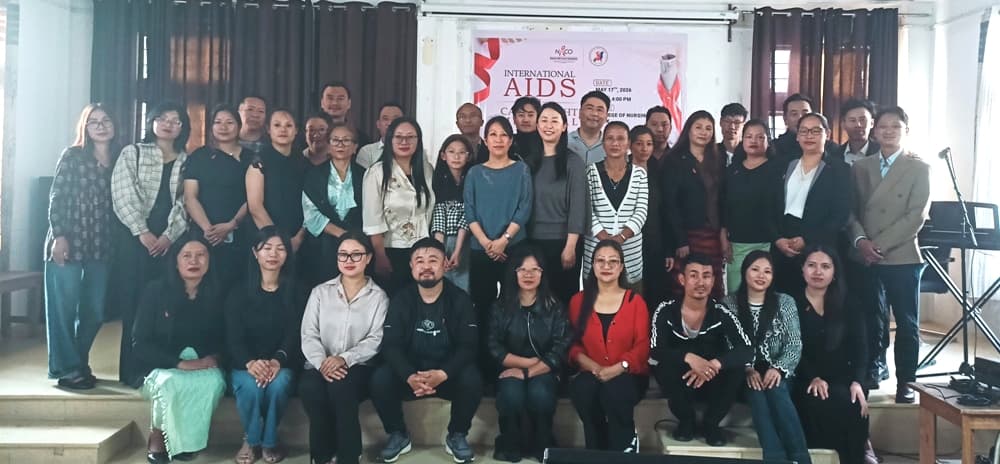
KOHIMA — The International AIDS Candlelight Memorial was observed at the College of Nursing, Naga Hospital Authority Kohima (NHAK), on Sunday.
Addressing the event on the significance of the day, Dr. Chibenthung Kithan, District AIDS Control Officer (DACO), District Development Coordination and Monitoring Committee (DISHA), said the International AIDS Candlelight Memorial is one of the world’s oldest and most meaningful community-led movements in response to HIV and AIDS.
He said the memorial serves as an occasion to honour and remember those who have lost their lives, while also renewing global commitment to support people living with HIV and strengthen efforts towards ending the epidemic.
“Across the world, communities gather to light candles in memory of loved ones, friends, colleagues, and countless individuals whose lives were affected by HIV/AIDS. The candlelight represents hope in the midst of loss, unity in the face of stigma, and a shared commitment to continue the fight against HIV/AIDS,” Kithan said.
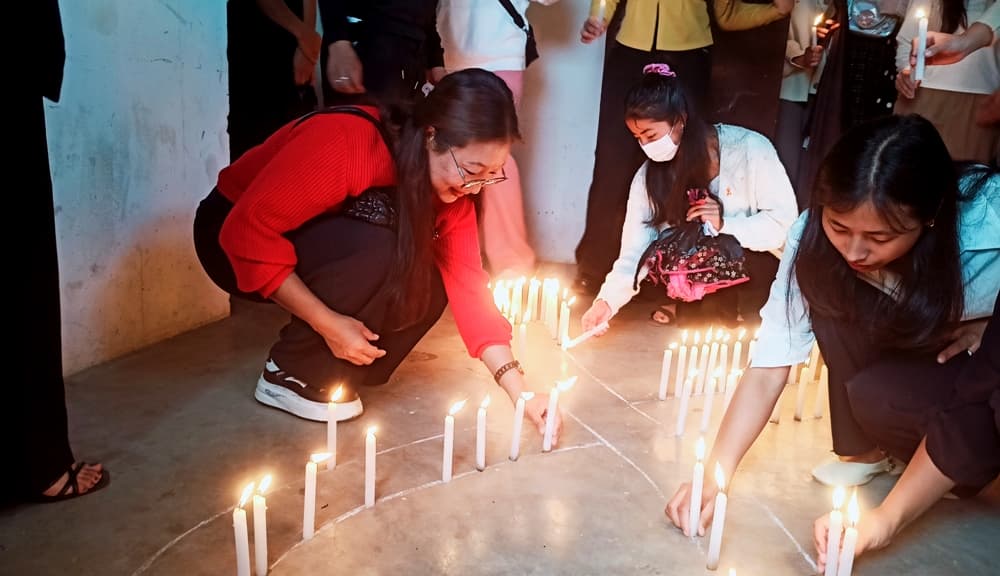
He mentioned that the theme for this year, “Light the legacy: Remember. Advance. Act.” carries a message of remembrance, hope, resilience, and responsibility.
According to him, the theme reflects the journey of millions of people affected by HIV/AIDS and recognises the enduring contributions of activists, healthcare workers, caregivers, community leaders, and advocates who transformed the global response to HIV through courage and determination.
“The phrase ‘Light the Legacy’ honours the lasting impact of those who paved the way in HIV response. In the early years of the epidemic, fear, misinformation, and discrimination isolated many people living with HIV/AIDS. Yet, communities rose with courage and compassion to demand healthcare, dignity, equal rights, and justice,” he said.
Kithan stated that the memorial is first and foremost an occasion of remembrance.
He said, “Millions of lives have been lost to AIDS-related illnesses worldwide, and the pain of that loss continues to be felt by families and communities. Remembering those individuals is an act of honour and respect.”
At the same time, he said remembrance also means acknowledging the ongoing challenges faced by people living with HIV today.
He opined that although medical science has advanced significantly, stigma, fear, misinformation, and social inequality still prevent many individuals from accessing healthcare and support.
The official also stated that the word “Advance” highlights the remarkable progress achieved in HIV prevention, treatment, care, and advocacy.
He said scientific breakthroughs such as ART, prevention of mother-to-child transmission, early diagnosis, and improved healthcare systems have transformed HIV from a fatal disease into a manageable chronic condition for many people.
“Advancement also includes increased awareness and public education, stronger legal protection for people living with HIV, greater community participation in healthcare responses, improved access to social protection and support services, and youth engagement in awareness and prevention initiatives,” he said.
Highlighting the final goal of the theme, “Act,” Dr. Kithan said remembrance alone is not enough and that action is essential to ending HIV as a public health threat and ensuring that every individual can live with dignity and access quality healthcare.
He said action is needed at every level and added, “Governments must strengthen healthcare systems and ensure accessible HIV services. Communities must challenge stigma and discrimination."
Emphasising that educational institutions must promote accurate awareness among young people. Families and individuals must support testing, treatment adherence, and compassionate care. He also added Civil society organisations must continue advocating for vulnerable and poor populations.
He also emphasised the important role of young people in carrying the movement forward by promoting awareness, empathy, safe practices, and social inclusion.
The official asserted that the International AIDS Candlelight Memorial 2026 is both a moment of reflection and a call to renew commitment.
“Through the theme, the world is reminded that HIV response is built upon decades of courage, advocacy, compassion, and resilience. As candles are lit across communities, they symbolise mourning and remembrance. They also symbolise hope for a future free from stigma, discrimination, and AIDS-related suffering,” he said.
Furthermore Kithan said, “Together, by remembering the lives lost, advancing progress, and taking meaningful action, we can continue the journey towards ending AIDS and building a world where every person is treated with dignity, respect, and equality."
A speech was also delivered by Lukingailu, who shared her experiences and called for action to eradicate the disease while emphasising the need for timely check-ups and protection to live a healthy and long life.
The programme was led by Kechangulie, while special performances were presented by students of the College of Nursing, NHAK, and Kripa D Block and Kripa PR Hill, Kohima. Aching, President of KNP+, offered a prayer and led the lighting of candles.