[caption id="attachment_108261" align="aligncenter" width="565"]
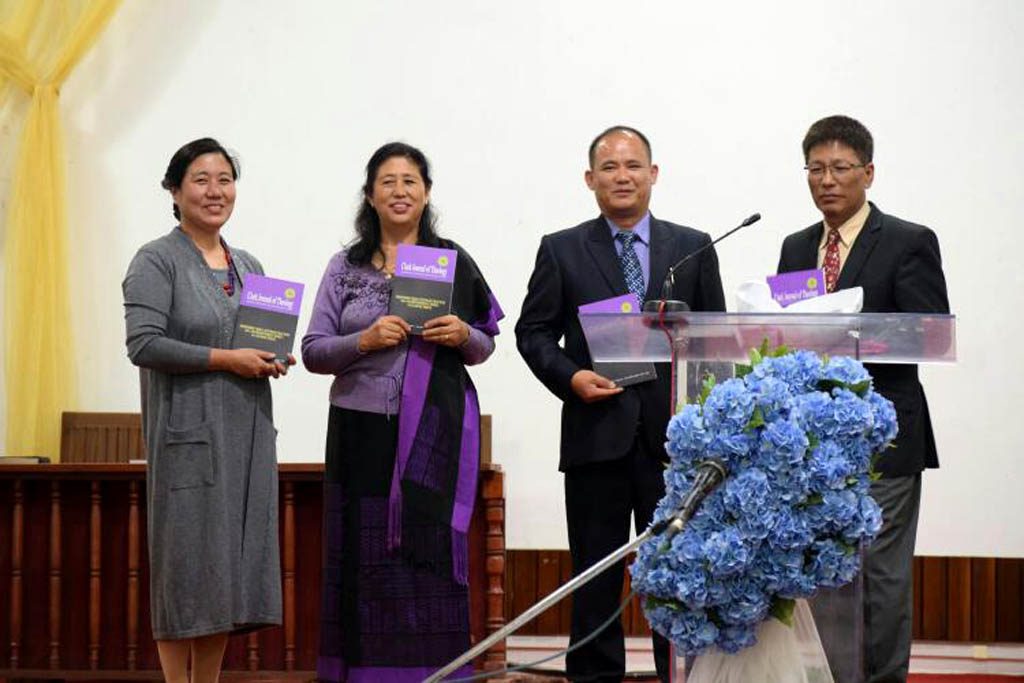 Education and Communication Secretary NBCC Dr. Botoholi, Chairperson of the CTC Board of Governors Mrs. Rowainla, Principal of the Clark Theological College Rev. Dr. Marnungsang and editor of the Clark Journal of Theology Dr. L Imsutoshi Jamir during the release of the journal.
[/caption]
Dimapur, April 9 (EMN): Clark Journal of Theology Volume VII, No.1 (January-June 2017) of Clark Theological College was officially dedicated and released by the Principal of the College Rev. Dr. Marnungsang on the occasion of Commissioning Service for the 2017 Graduating Students of the Clark Theological College at the Multi-purpose Hall, CTC, Aolijen.
The Clark Journal of Theology encourages biblical scholarship and theological thinking in relating the Gospel of Jesus Christ to our socio-political, cultural and religious contexts in North East India and beyond. The journal encourages scholars from various fields and branches of study to share information and perspectives on the contextual issues and problems. In doing so, the Clark Journal aims toward providing Christian witness and critical academic as well as theological voice in the ongoing ministry and needs of both the church and society.
The Clark Journal of Theology addresses one of the most critical concerns of our contemporary tribal communities of the North East India. The editorial board consciously acknowledged the pertinence of addressing the issue of women empowerment and reservation at the backdrop of tribal customary law and practices thus the current issue on the theme, “Empowering tribal customary practices vis-à-vis disempowering women: An academic debate.”
Focusing on the theme, the present issue carries scholarly articles such as, “Tribal women as cultural other: An academic debate,” “Equal but repressed and marginalised: Biblical and theological reflection of a Naga Christian women,” “The games people play through the prism of the 33% reservation for women,” “Gender implications of tribal customary practices: A reflection,” “Gender based critique of customary law, tribal identity and citizenship,” “Can gender disparity mess in Naga customary law be balanced?” “The problems of tribal women in India: Critically re-evaluating and re-defining tribal heritages for gender justice,” and “Rethinking gender relations: Cosmo vision and rights from an indigenous women’s perspective.” Two review works included in the present issue also addresses on the theme of the issue.
Bearing in mind the ‘community’ nature of tribal society, the essays presented in the issue argued that the importance of customary law and practices that governed and maintained tribal community cannot be negated. At the same time, they also argued that it is equally important for customary law and practices to be based on a jurisprudence that affirms life and dignity of all, irrespective of gender. Further, they argued that once the process for tribal jurisprudence has evolved, the prevailing sides that undermine “justice to and for all,” “equal participation of all in decision-making process,” and most importantly, the inconsistencies in the present system can be addressed both at the functional as well as at the conceptual levels.
The editor of the journal observed that addressing this critical issue at this juncture may be risky affairs for many, but is unavoidable terrain where tribal scholars must venture in for the purpose of doing theology with boldness and clarity. He further stated that developing innovative approach that encompasses dignity, justice, equality and respect to “all” could be a pathfinder and capable of addressing the present debate associated with women empowerment, women reservation and tribal customary law and practices.


