


Nagaland partners with Childaid Network Foundation and Rotary Club to improve government school education and teacher training.
KOHIMA — The School Education department will partner with Germany-based Childaid Network Foundation and the Rotary Club of Queens Necklace, Mumbai, to improve the quality of education in government schools across Nagaland, with a focus on digital infrastructure, teacher development, early childhood education and vocational training.
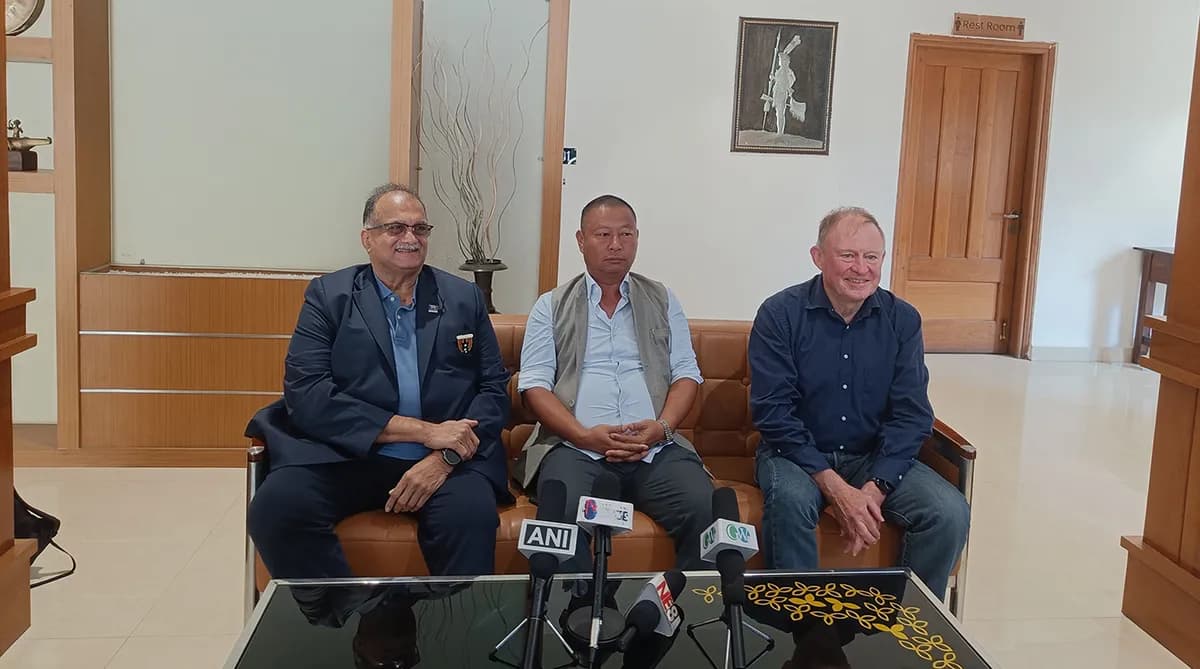
The partnership was announced at a press conference addressed by Advisor for School Education Dr. Kekhrielhoulie Yhome, Rotary Club of Queens Necklace programme funder Nikunj Jhaveri, and Childaid Network Foundation president Martin Kasper at Hotel Vivor, Kohima, on Friday.
Yhome said delegates from Childaid Network Foundation, Rotary Club of Queens Necklace and the state Education department had held a series of discussions and meetings since October 5, 2026, and visited various school ecosystems to understand the challenges and opportunities in the state.
He said the discussions covered issues requiring interventions beyond the state government's existing capacity, including public financing of school systems, blended finance and the development of future-ready skills among students.
Yhome said the department had undertaken a gap analysis of its capabilities and examined global education systems to identify areas for improvement.
However, limited resources and the lack of knowledge partners made it difficult to introduce high-quality interventions, he added.
He said the proposed partnership would address several areas, including digital infrastructure in classrooms, early childhood care and education, vocational education and improved teaching practices.
Jhaveri said he was impressed by the state government's commitment to transforming the education system and expressed his team's willingness to contribute beyond financial support by connecting the initiative with the corporate sector.
He described the collaboration between Childaid Network and Rotary as a combination of domestic and international philanthropy focused on the Northeast, identifying Nagaland as one of their key areas of engagement.
Stating that education reform could not be achieved within a year, Jhaveri expressed hope that the partnership would be implemented through a plan spanning at least five years.
Kasper said Childaid Network was committed to helping children access quality education and that the visit aimed to explore how the organisation could further support Naga children in building their future.
He said the foundation currently had around 1,500 project locations across the Northeast and appreciated the state government's cooperation, emphasising that the organisation did not intend to duplicate existing systems.
“We want to help the government systems succeed and play sort of a catalytic role in terms of funding, but also in terms of knowledge sharing, networking, challenging, monitoring, whatever is required,” Kasper said.
He said he and his wife had established Childaid Network 20 years ago using their own capital to support children in need. Since then, the organisation has worked with various local partners in the Northeast and spent around 2 to 3 million euros annually on education.
Kasper said the foundation initially focused on bridging courses for children and young people who had missed primary schooling. With most children now enrolled in schools, its focus had shifted towards improving teaching quality and learning outcomes in government schools.
He added that the organisation would help analyse how available resources could be used more effectively to achieve better results, while strengthening local capacity and partnerships.
Kasper, who first visited Nagaland in 2006, observed that government school enrolment had increased considerably over the past two decades. However, he noted that improvements in educational outcomes had not kept pace with enrolment, leaving gaps that needed to be addressed.
He said the long-term objective was to strengthen local education systems to the point where the organisation could eventually return as a visitor rather than a benefactor.