


CDI flags lack of cooperation affecting domestic workers’ rights, welfare, and registration in Nagaland
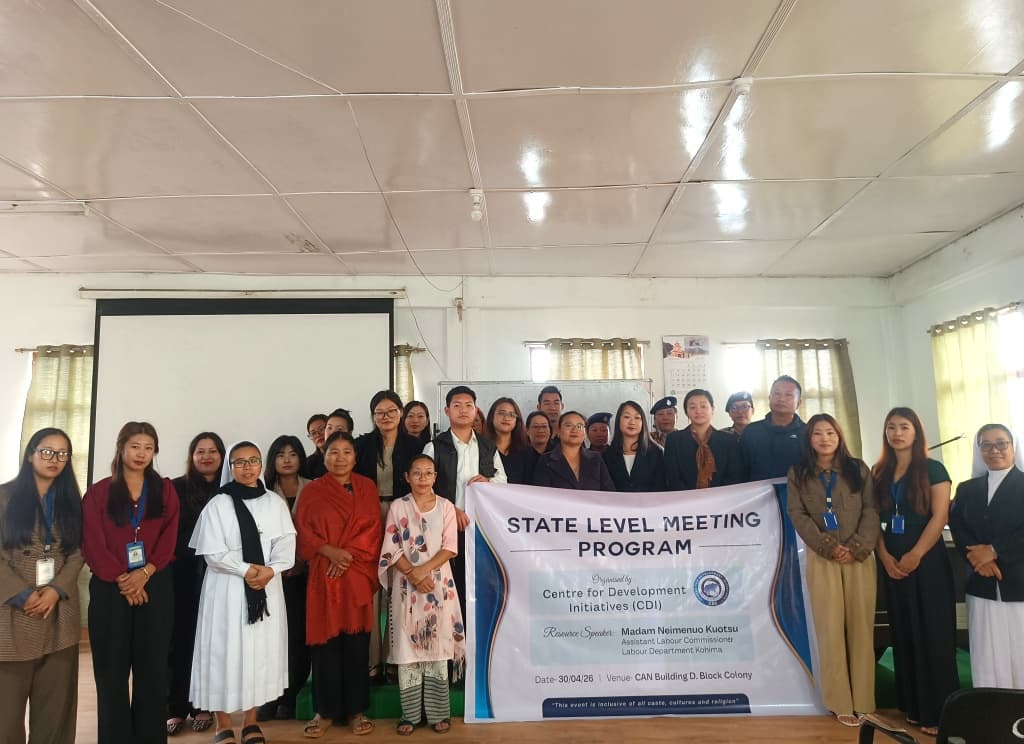
KOHIMA — Members of the Centre for Development Initiatives (CDI) have expressed concern on the lack of cooperation from the concerned authorities and employers of domestic workers in Nagaland, stating that even when they approach employers they receive no support.
This was stated during a state-level meeting organised by the CDI on Thursday at the Catholic Association of Nagaland (CAN) building, D Block colony, Kohima.
It was informed that the purpose of the meeting was to create awareness and highlight important issues concerning domestic workers and their welfare.
According to CDI members, identifying workers through door-to door visits are difficult because many employers do not cooperate or allow their workers to register with their organisation.
Speaking about the challenges, they cited lack of awareness and access to government welfare schemes for domestic workers, along with low wages, irregular payments, and no fixed minimum wage.
Also read: Nagaland Governor lauds VBDAN’s blood donation efforts
They also highlighted the absence of proper documentation, identity cards, and written agreements, as well as lack of job security, social protection, or benefits such as insurance and pension, limited opportunities for skill development, cases of exploitation and abuse, long working hours with little rest, poor working conditions, and lack of recognition and dignity of domestic work as a profession.
Additionally, the members stated that domestic workers are often unable to give their time to attend important programmes and training sessions, which makes it difficult for them to support effectively.
The representative members of CDI from Kohima city informed that they have identified 1,432 domestic workers and have registered 1,137 domestic workers under them. They have also identified 78 stakeholders.
In Dimapur city, they have identified 695 domestic workers, registered 695, and have formed 41 groups.
They encouraged all the domestic workers to come forward and get registered under their organisation to avail certain benefits.
Neimenuo Kuotsu, Assistant Labour Commissioner of Labour department, shared that the domestic workers also have basic rights and protection such as right to fair wages, timely payment and safe working conditions.
She said that the nature of the work of domestic workers falls under the category of unorganised workers. She mentioned that the Labour department often encourages the domestic workers to register themselves under e-shram database, since they fall under the unorganised sector, which will also help the government to track and extend support.
Kuotsu clarified that e- shram is not a scheme but it is a portal and when they register themselves, it will bring lots of future benefits under the unorganised sector.
Kevilenuo Veswuh, domestic worker, also shared about her journey and experiences working as a domestic worker.
The agendas discussed in the meeting included awareness and accessibility of government schemes for domestic workers; fixation of minimum wages and fair payment system; safety, dignity and respectful treatment at workplaces, role of departments, agencies and stakeholders in supporting domestic workers; recognition of domestic workers as an important workforce; and skill development and capacity building opportunities for self help group domestic workers.