


Hito Kiho shares how choir music can become a viable career, highlighting discipline, global exposure and Nagaland’s choral journey.
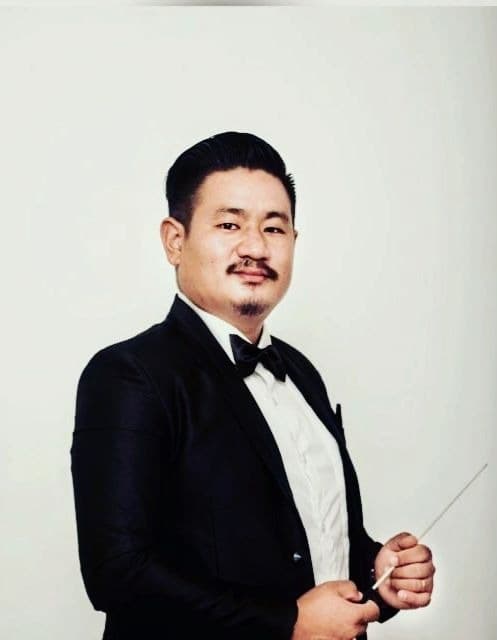
DIMAPUR — Music has been a constant source of comfort since childhood for Hito Kiho, a conductor, music educator, composer, arranger, and the founder and conductor of The Nagaland Madrigal Singers (TNMS).
His earliest and most influential teacher was his mother, who nurtured his love for singing, leading to one of his most cherished memories: his first performance at his local church alongside his sisters, Villy and Vinika, and his cousin, Nillo Swu.
Having completed his schooling at Eden Higher Secondary School, Aghunato, and later graduating from Patkai Christian College, Kiho’s heart was initially set on the violin; he planned to master the instrument after the 10th grade. However, his journey took an unexpected turn when he moved to the Philippines. Immersed in their rich choral culture, his passion shifted entirely toward the art of Conducting—a decision he has never regretted.
Also read: Atoka Chophi on Exploring Private Tutoring as a Career Path
He spent several years in the Philippines honing his craft, earning his Bachelor of Music at the Asian Institute for Liturgy and Music (AILM) and subsequently his Master of Music in Choral Conducting from the College of Music and Performing Arts (CMPA) at St. Paul’s University.
He studied under some of the most legendary figures in the Asian choral world: Dr. Francisco Feliciano, a national artist of the Philippines and founder of AILM; Dr. Eudinice Palaruan, whom he assisted as assistant conductor at the International Bamboo Organ Festival in 2015; and Dr. Arwin Tan and Christopher Borela.
Upon returning to Nagaland in 2017, Kiho committed himself to music education and church ministry. He served as the music director at Sumi Baptist Church Purana Bazar, assistant professor at the Nagaland Conservatory of Music, and adjunct faculty at the Margrete Shishak School of Music (MSSM). Today, he is the choir director at Eden Higher Secondary School, Thilixu.
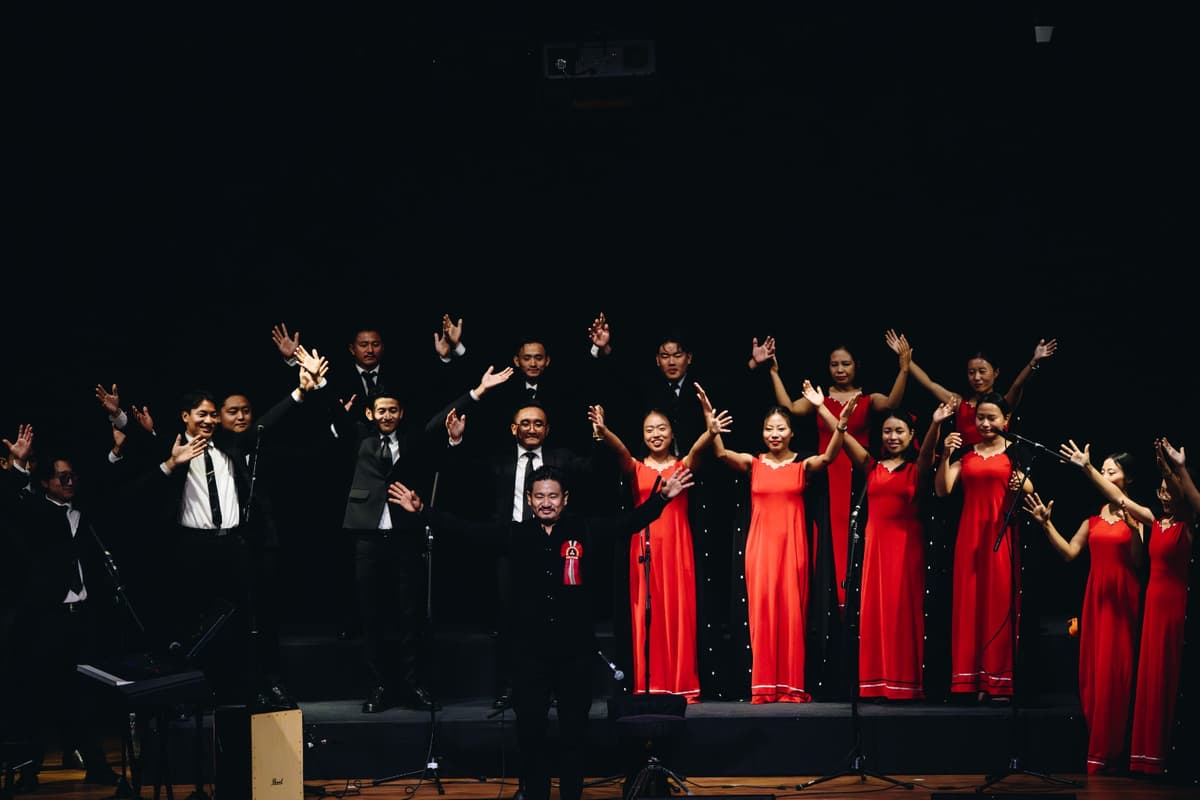
In 2023, driven by a vision to professionalise choral singing for more than a decade, he gathered a group of talented music graduates to form The Nagaland Madrigal Singers. The team dreams of placing India on the global map of Choral Music. In 2024, after just eight months of intensive preparation, they competed in the 13th World Choir Games in Auckland, New Zealand, where they won two gold medals for the country.
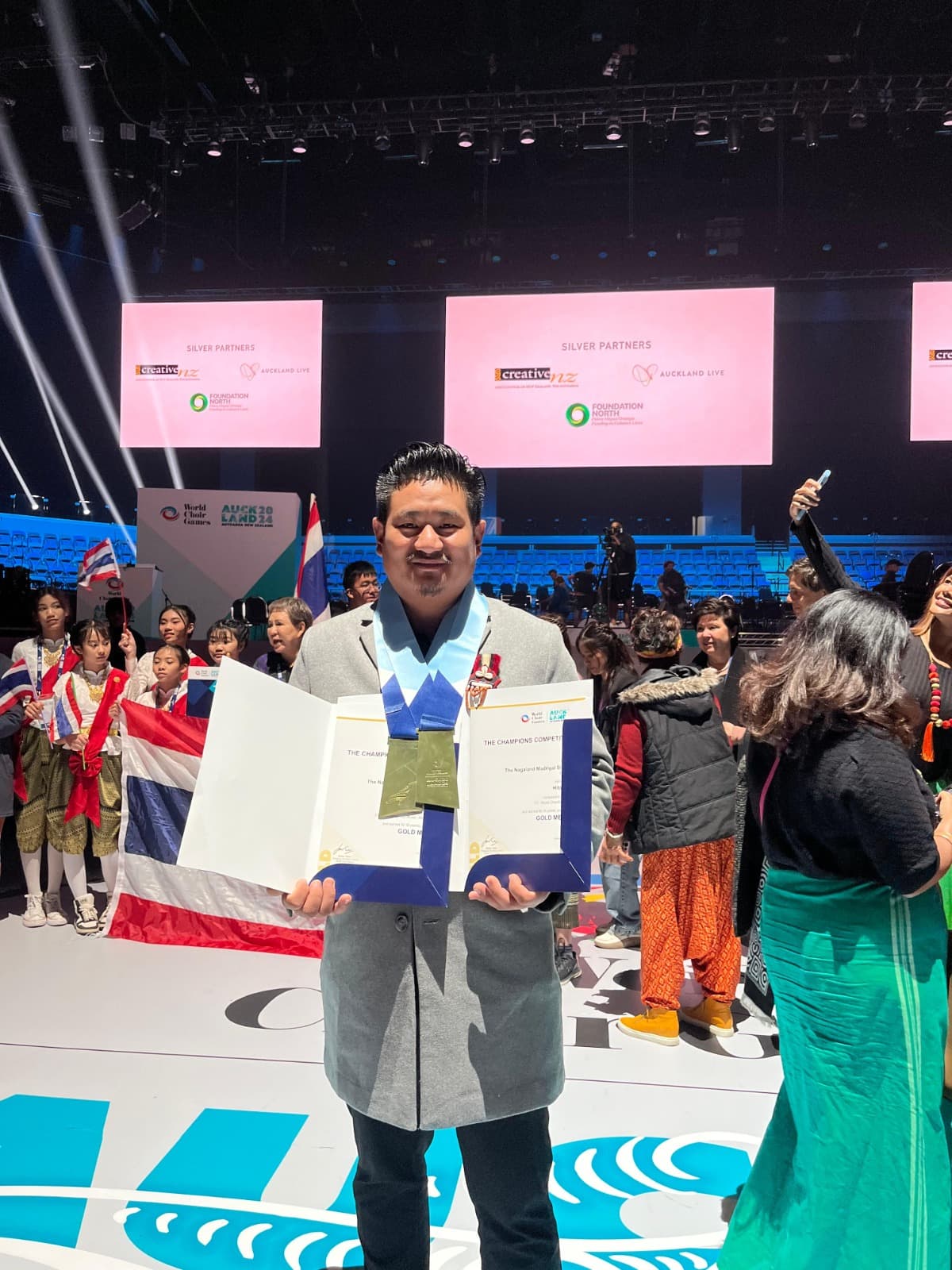
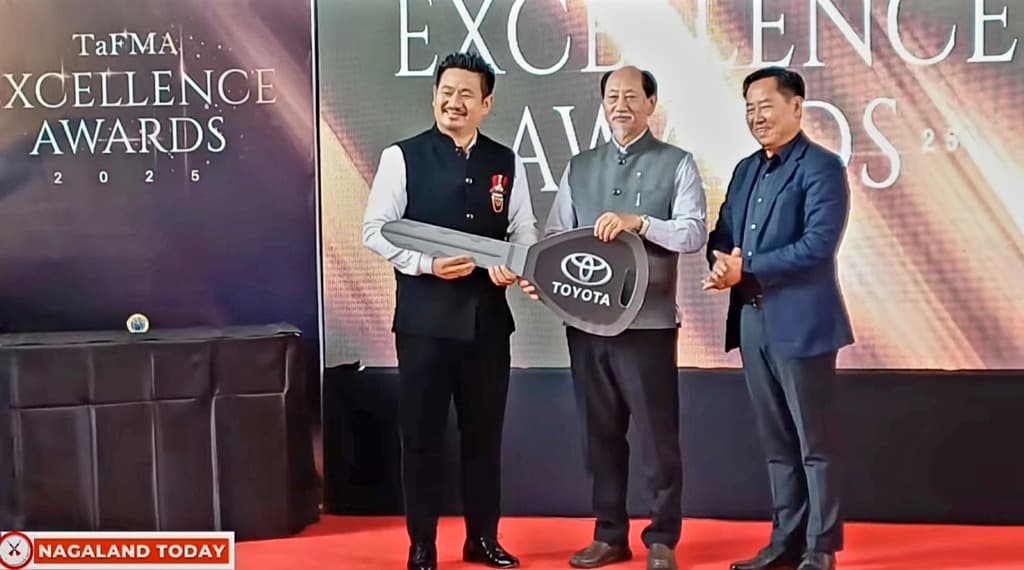
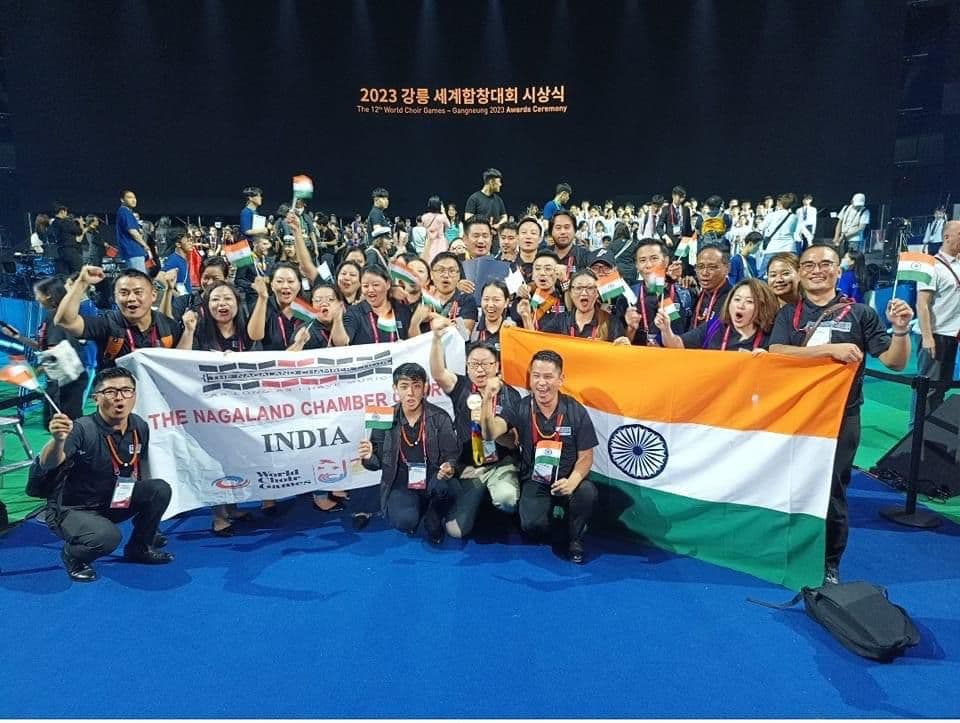
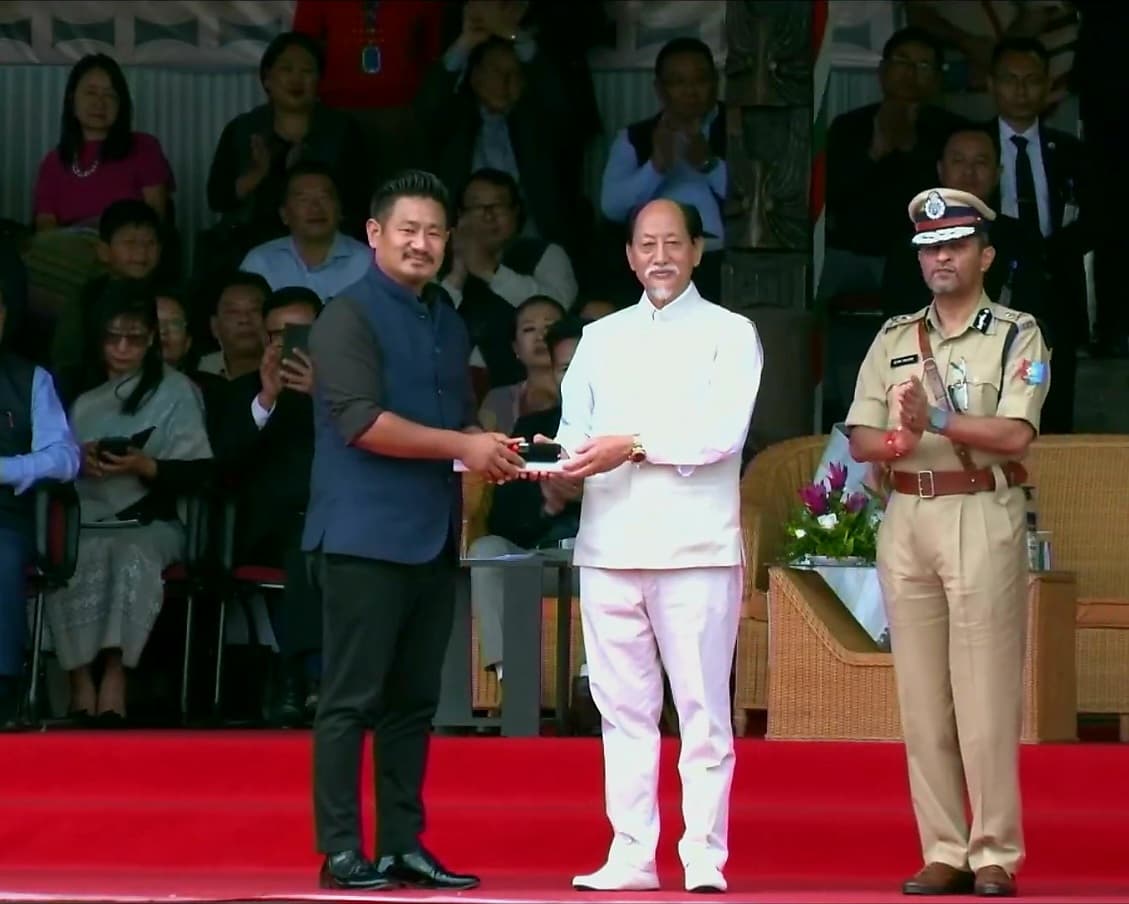
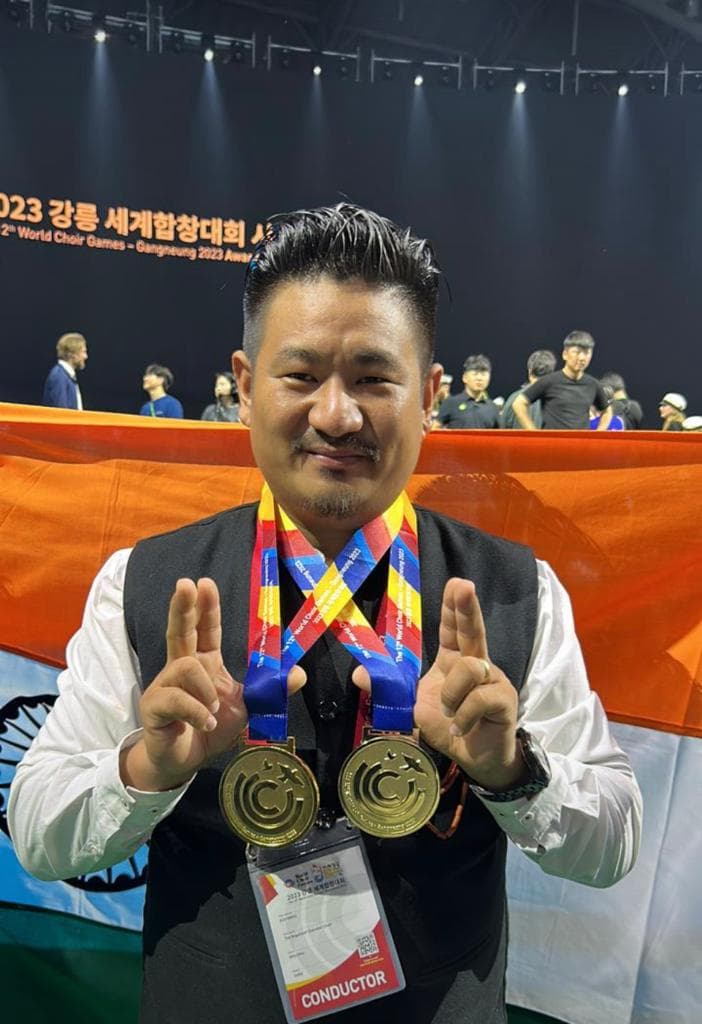
Kiho’s key accomplishments and awards between 2023 and 2026 include the Governor’s Gold Medal (2025) and the TaFMA Ultimate Achiever of the Year (2025), a recognition for their historic success at the World Choir Games. He also led The Nagaland Chamber Choir to win two medals at the 12th World Choir Games (2023) in South Korea and received the Music Honorary Award (2023) conferred by the Sumi Music Forum.
Committed to creating original Naga choral literature, some of his premiered works at the 12th and 13th World Choir Games include "Swara" (Tone), "Tiqhe Tini Le" (Song of Festival), "Mhesho Mheghi Kivi" (Vibrant Culture and Tradition), and "Kekhrie", an arrangement of the Methaneilie Jütakhrie solo. In 2025, he composed "Hornbill Festival, A Celebration so Rare", commissioned by TaFMA, which incorporates the 16 tribal dialects of the state in one song, premiered alongside The Nagaland Madrigal Singers and Eden Hr. Sec. Choir, Thilixu.
His musical journey has also taken him to the outside world, where he was invited to conduct seminars for choir conductors and conducted a mass choir of 140 singers in Java. Whether he is judging or participating in an international competition or teaching a choir, his goal remains the same: to spread peace and love through the divine gift of music.
In this interview with Eastern Mirror, Kiho outlines the journey of pursuing a career in choir music.
For students, how would you explain choir music as a source to discipline oneself?
I have always believed that choral music is the most inclusive and participative form of art. To be a chorister is to undergo a transformation of character. It is within the choir that we instil life ethics, rigorous discipline, and a deep sense of shared responsibility in every individual. Once a child becomes actively involved in a choir, they are given tasks that foster a profound sense of accomplishment and accountability.
My greatest wish is to see choral music flourish throughout Nagaland and India. Because it is the most collaborative form of music-making, it has the power to unite us like nothing else. After all, for me, music is not merely an art form—it is a mission. To me music aims to uplift, to inspire, and to provide a sense of 'home' and stability during these much-needed and unpredictable times.
At what age should students ideally begin choir training, and why?
In my experience, there are no fixed age limitations for when a child can join a choir. The moment a child develops the ability to listen intently and sing independently is the moment they should begin exploring choral music. The primary variable is not the child’s age but the selection of repertoire.
As a conductor, I believe it is our responsibility to wisely curate music that matches the developmental level of our singers. For example, at Eden Higher Secondary School Choir, Thilixu, I lead a choir with students ranging from grades 4 to 12. To ensure everyone can participate effectively, I often select equal-voice compositions. When a piece is originally written for SATB (Soprano, Alto, Tenor, Bass), I frequently re-arrange the score into SSAA (Soprano I & II, Alto I & II) voicing. By adapting the music to fit their natural vocal ranges, I ensure that every student remains actively engaged, technically supported, and inspired by the music we create together.
How can students progress from choir member to section leader or conductor?
The only means for a student to progress from being a chorister/choir member to section leader/conductor is demonstrating leadership roles, musical excellence and pursuing specialised training.
A section leader basically takes care of a certain section of singers during the absence of the director; in other words, a section leader acts as a bridge between the singers and director.
By saying so, one must master the vocal technique and sight-reading; it is a must that section leaders must know their music before others to effectively handle the sectionals.
Reliability is one quality a person should possess in order to be in that position. Showing up to rehearsal regularly is a must, and punctuality is non-negotiable for those looking to be appointed as leaders.
The path to becoming a conductor or director often involves many years of experience as a chorister and section leader, and most importantly, having a formal education would be more effective.
It is also important for one to find a mentor. Connect with experienced conductors for guidance on rehearsal techniques. Seek mentorship from experienced directors, attend conducting workshops, and study different directors' styles to develop a unique personal approach.
Having acquired a bachelor's and master's degree in Choral Conducting is highly recommended. One must also serve as an assistant choir director to learn foundational conducting techniques, rehearsal planning, and administrative tasks like repertoire selection.
Proficiency in piano is highly beneficial for accompanying rehearsals and teaching parts.
What skills are essential for someone who wants to become a choir conductor?
Beyond innate musical talent, leadership is the most critical quality a conductor must possess. I view the conductor as an 'organiser of souls'—someone who brings together individuals from vastly different walks of life to achieve a singular, harmonious vision. In essence, the conductor serves as the essential bridge between the vision of the composer or arranger and the technical execution of the singers.
Technical proficiency in the piano or another instrument is indispensable, as it allows the conductor to effectively accompany rehearsals and meticulously teach parts. Furthermore, the role requires a high degree of administrative and artistic foresight. One must be able to manage and set the entire repertoire for an event, ensuring the programme is cohesive and impactful. To lead a choir is to be a master of both the music and the people who create it.
How can a conductor select a repertoire?
In my experience, selecting the right music is a distinct art form that varies significantly depending on the setting. For Church Choirs, repertoire selection is guided primarily by the liturgical season. Following the church calendar provides a clear framework that allows a Music Director to choose anthems that resonate with the specific spiritual themes of the time.
However, selecting a repertoire for a secular concert or professional show is a different challenge entirely—one that is as demanding as it is rewarding. As a conductor, I must be deeply informed about the audience demographics and the specific nature of the event to ensure the programme is both relevant and impactful.
When I curate a programme, I follow three core pillars:
Diversity and Cultural Inclusion: I believe in presenting a rich tapestry of genres and cultures. It is my priority to include local composers from our region in every repertoire. This not only keeps the singers engaged but also ensures that our unique Naga and Indian identity is represented on the global stage.
Pedagogical and Educational Value: I focus on what I call 'attainable challenges'. It is vital to choose scores that stretch the choir’s technical abilities and musicality without overwhelming them or breaking their morale. Growth happens in that careful balance between comfort and challenge.
Logistical Practicality: Artistic vision must be balanced with reality. I meticulously consider the available rehearsal timeline, the specific vocal ranges of my sections (SATB) budgetary requirements for acquiring legal scores and Compose/Arrange Music depending on the kind of event and audience we are to perform for.
By balancing these elements, we create a performance that is not only musically excellent but also sustainable and deeply meaningful for the community.
Can AI assist in choir training, composition, or vocal analysis?
In this rapidly evolving digital era, I believe that Artificial Intelligence (AI) can serve as a valuable tool to streamline our tasks and make our creative processes more efficient. However, AI can never replace the fundamental essence of our craft.
Human voice remains the only truly universal instrument. In fact, every other musical instrument in existence is merely an imitation of the human voice's natural resonance and emotional depth. No matter how hard AI attempts to replicate the complexities of performance, true originality and the 'soul' of a song will always belong to the human spirit. While technology may assist us, the raw, authentic connection of voices singing in harmony remains an irreplaceable human experience.
What does the future of choir music look like for students starting today?
For students starting their journey today, the future of choral music is boundless. I believe that our primary mission as Naga musicians is to narrate our story to the outside world. We possess a unique cultural identity, and choral music is the most powerful medium through which we can share that heritage globally.
Being an active member of a committed choir is a passport to the world. It provides opportunities that transcend borders, allowing us to represent our people on prestigious international stages. However, the longevity of this vision depends entirely on dedication. A choir composed of 100% committed choristers is an unstoppable force that can sustain any vision and overcome any challenge.
Today’s students have more opportunities than ever before to demonstrate their artistry through international festivals, digital platforms, and global competitions. My message to them is simple: if you remain committed to the craft and stay true to your roots, the choir will take you to places you’ve only dreamed of.
Can choir music be a financially sustainable career, and how can students plan for it?
In the academic setting of a school or college choir, the focus is often on meeting specific institutional mandates or curriculum-based tasks. These ensembles often operate within fixed academic windows, requiring conductors/ Singers to achieve high-quality results within limited timeframes.
In contrast, a professional choir operates with a much higher level of rigour. Its repertoire is significantly broader, spanning complex classical works to contemporary global arrangements. Admission is strictly through a competitive audition process, and its members are skilled professionals who are compensated for their artistry. Young singers are advised to equip themselves technically so they may seize the opportunity to join such elite ensembles when they are ready.
Joining a professionally trained ensemble opens doors to unparalleled exposure. Its members may participate in global events.
Being a member of a professional choir/trained choir continues to be a leading professional force, travelling nationally and internationally multiple times a year on fully sponsored tours. These choristers receive professional performance fees for every appearance. For these musicians, many of whom are already esteemed tutors and faculty at various institutions. This provides a vital professional platform and a secondary stream of income, proving that choral music is a viable and prestigious career path
What is your take on joining/competing on international stages?
To me, competition is not solely about winning. While it is human nature to strive to cross the finish line first, the true value of entering an international competition like the World Choir Games is about cultural diplomacy—it is the act of narrating our rich diversity to the outside world through music. It’s an opportunity to share our music and let the world know about our homeland: Nagaland, a beautiful landscape filled with distinct tribes living together in harmony.
Involving ourselves in these global events goes far beyond the pursuit of medals or laurels. It’s about building relationships and engaging in invaluable artistic exchange.
For instance, during the 12th and 13th World Choir Games, we competed alongside approximately 300 choirs from over 40 countries each year. In these arenas, we not only showcase our unique Naga music but also gain unparalleled experience learning from diverse professional choirs around the globe. Competition, in this sense, is a masterclass in global perspective.
RAPID INSIGHTS
Strict conductor or friendly mentor?
Both
One choir habit every student must learn?
Commitment
A composer every choir student should know?
Johann Sebastian Bach