


C-Edge College hosts an academic discussion on BEFR 1873 and the legal foundations of the Inner Line Permit.
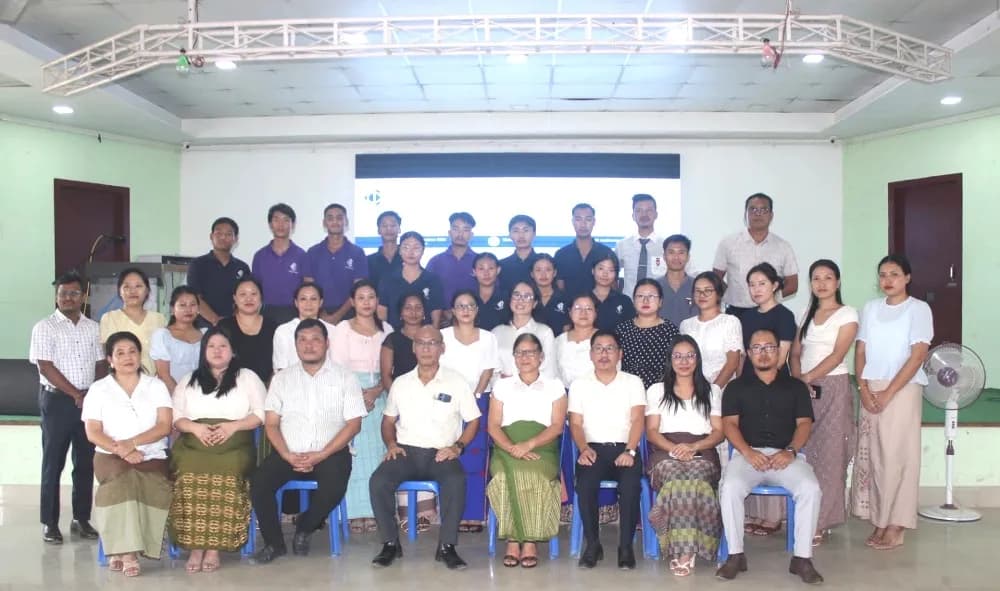
DIMAPUR — The Department of Political Science at C-Edge College, Chümoukedima, organised a post-seminar knowledge-sharing and discussion session titled "A discourse on the Bengal Eastern Frontier Regulation (BEFR), 1873: Understanding the legal foundations of Inner Line Permit (ILP)" at the GK Auditorium on September 16.
According to an update, the academic discourse brought together faculty and students to examine the historical origins, constitutional dimensions, and contemporary relevance of the ILP system in Nagaland.
Delivering the opening address, Principal Emeritus Dr. Chubatola Aier stressed the importance of understanding the historical and legal foundations of contemporary institutions, especially where questions are raised regarding the continued relevance of a colonial-era regulation and the potential for misuse. She stated that such regulatory provisions should be implemented efficiently and beneficially so that people are empowered towards sustainability and growth.
Principal of C-Edge College, Dr. Moameren Pongen, traced the historical origins of BEFR 1873 and discussed the continued relevance and adaptation of the Inner Line system. His presentation focused on indigenous rights, identity, regulation of migration and movement, and the need to balance development with local interests.
Read more local news: Northeast states to put NEP implementation gaps before Centre
Head of the Department of Political Science, Duvolu Rhakho, addressed the constitutional dimensions of the ILP, particularly with reference to Articles 19(5) and 371A. She explained the regulatory nature of the ILP and highlighted the need for a streamlined mechanism that facilitates economic interaction and investment while safeguarding indigenous rights. She also outlined different categories of permits, including provisions for students.
During the interactive session, discussions covered concerns regarding whether ILP enforcement leads to harassment or corruption, noting that any such practices are misuses that must be curtailed.
President of C-Edge College, Moa Aier, highlighted the significance of the ILP regime in relation to Nagaland's constitutional position under Article 371A.
He stated that the system should be protected and used as a tool for positive development, ensuring visitors feel welcomed rather than discouraged.