


Nagaland Home Commissioner Abhijit Sinha says BEFR 1873 protects indigenous rights while ILP must balance safeguards with development.
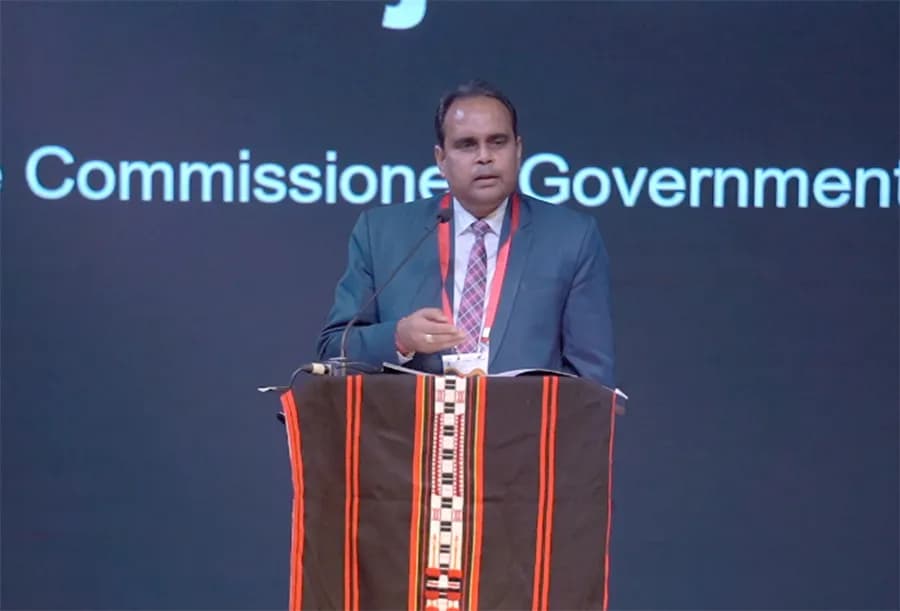
DIMAPUR — The Bengal Eastern Frontier Regulation (BEFR), 1873, continues to serve as an important safeguard for indigenous communities, while the Inner Line Permit (ILP) system must evolve with changing times to balance protection with development, Home Commissioner Abhijit Sinha said on Friday.
Sinha was speaking at the inaugural session of a two-day national seminar on BEFR 1873, organised by Naga Students’ Federation (NSF) at Town Hall, Dimapur.
He said that the more-than-150-year-old regulation was introduced by the British for a different administrative purpose but was consciously retained by independent India.
The BEFR was adopted through the Adaptation of Laws Order, 1950, with the term “British subjects” replaced by “citizens of India”. Its continuation reflected recognition of the need for special safeguards to protect indigenous and smaller communities from demographic pressure and possible alienation of their resources, he said.
According to Sinha, the significance of the BEFR went beyond regulating entry into protected areas, for instance Section 7, which provides protection against outsiders acquiring land or interests in land and its products in areas covered by the regulation.
He said the provision was particularly important because land constituted one of the most valuable assets of indigenous communities and its alienation could have long-term consequences.
On the ILP, Sinha said its continuation in Nagaland formed part of the historic 16-Point Agreement between the Naga People’s Convention and the government of India, which preceded the creation of Nagaland as a state in 1963.
The ILP regime subsequently existed alongside Article 371A of the Constitution, which provides special safeguards concerning Naga religious and social practices, customary laws, and ownership and transfer of land and its resources.
While Article 371A provides constitutional protection, the ILP serves as an additional regulatory mechanism to manage entry and protect the interests of the indigenous population, he said.
Referring to a Gauhati High Court judgement delivered in June 2026, Sinha said that the court had upheld the legal and constitutional validity of the ILP regime and the powers of the state government to regulate its implementation.
The ruling, he said, provided important legal clarity for Nagaland as well as other north-eastern states where the ILP system is in operation.
Acknowledging practical challenges in enforcing the ILP, particularly in Dimapur, Sinha said the district had historically experienced significant movement of people due to its proximity to Assam, railway connectivity, the airport and its role as a transit point to neighbouring states.
He pointed out that the government had sought to modernise the ILP system, with the application process being made available online since 2025.
Sinha stressed that enforcement could not be left to the government alone and called for active participation from local communities, landlords, accommodation providers, student organisations and other stakeholders.
“ILP is not about prohibiting entry; anybody who wants to come is welcome, but they have to follow a process and obtain the required permit,” he said.
He called for a balance between safeguarding indigenous rights and ensuring that the regulatory system did not become unnecessarily restrictive or adversely affect economic activities, tourism, investment and development.
Stronger enforcement
Speaking at the seminar, Chairman of the Inner Line Regulation Commission (ILRC)-NSF, Senchumo NSN Lotha, called for stronger and more effective enforcement of the BEFR.
Lotha said the regulation was originally enforced strictly by the British, with applicants for ILPs subjected to scrutiny and their activities monitored to ensure they remained within the stated purpose of their visit. He added that the regulation later became an important instrument for protecting Naga identity, culture and land rights.
According to Lotha, there were no clear records of ILP implementation in Nagaland during the early years of statehood. He said former Chief Minister SC Jamir had told him that the government was preoccupied with problems posed by ‘underground groups’ and other challenges, resulting in ILP taking a “backseat”.
Lotha also highlighted several committees constituted by the state government to examine ILP implementation. He said recommendations made by committees headed by Alemtemshi Jamir and then Commissioner Sentiyanger were yet to be fully implemented.
He further referred to a committee headed by then Dimapur Deputy Commissioner Kesonyu Yhome, which studied ILP implementation in Arunachal Pradesh and Mizoram. According to Lotha, the committee found the systems in Arunachal Pradesh and Nagaland more “facilitative”, while Mizoram followed a more “regimental” approach, and recommended stronger enforcement practices for Nagaland.
Lotha also referred to a committee headed by Sinha that undertook research and consultations and submitted recommendations that contributed to the formation of the Register of Indigenous Inhabitants of Nagaland (RIIN).
He said the RIIN committee had completed its work and submitted its recommendations, which the state government had accepted in principle, but implementation remained pending due to objections and other factors.
Lotha said that while the original purpose of BEFR may have changed over time, its significance as a safeguard for indigenous communities remained important. He called for its provisions to be effectively utilised while adapting implementation to present-day realities.