


Sentilong Imchen shares insights on architecture career paths, GATE, and practice growth in Nagaland.

DIMAPUR — Sentilong Imchen from Dimapur is steadily establishing himself as an independent architect while inspiring a new generation of aspiring professionals in Nagaland. He is the founder of Sentilong Imchen Architects (SIA), through which he continues to expand the scope of professional architectural practice in Nagaland.
Born and raised in Dimapur, Imchen completed his schooling at Sainik School Punglwa, Peren, where he developed a disciplined outlook alongside a passion to pursue Architecture.
He began his formal architectural education at the Royal Group of Institutions, Guwahati, under Assam University, earning a Bachelor’s degree in Architecture. Following his graduation, he successfully cleared the Graduate Aptitude Test in Engineering (GATE), which enabled him to secure admission to the School of Planning and Architecture, Delhi. There, he completed his Master’s degree in Planning, further strengthening his academic and professional foundation.
Also read: Career in Commerce: Payal Dutta Breaks Down the Importance of Accountancy
Today, Imchen practises as an independent architect and urban planner, with additional specialisations in interior design and landscape planning.
In this interview with Eastern Mirror, Imchen shares insights about pursuing a career in architecture in the context of Nagaland.
Can you please tell us who an architect is and what architects do?
An architect is a qualified, trained, licensed individual who designs, plans, and supervises building and structural constructions in collaboration with engineers and contractors to bring forth a concept into reality. Architects translate client needs into detailed blueprints and transform the urban fabric of the surroundings into not only aesthetically beautiful but also functional, safe, and structurally sound buildings.
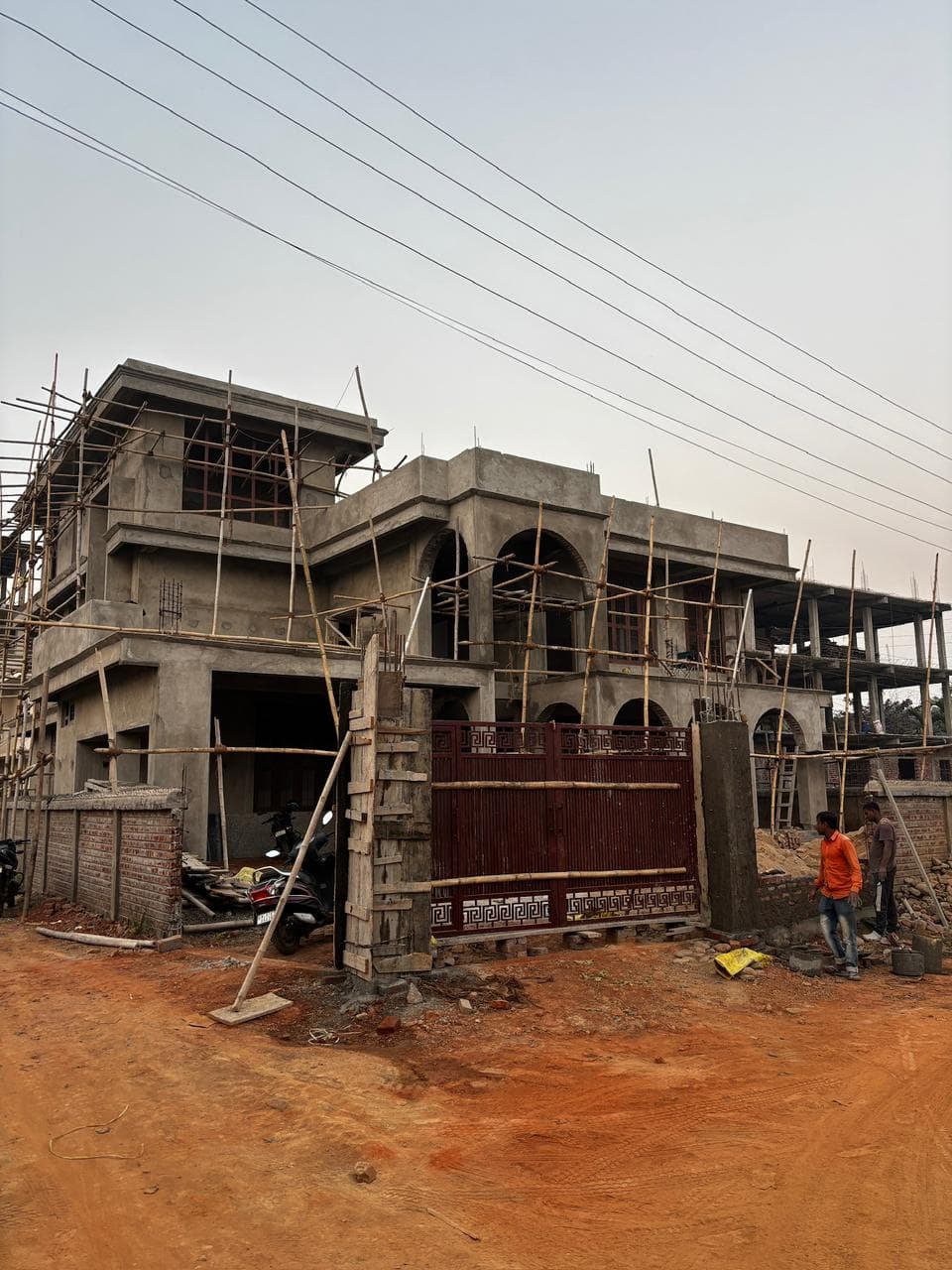
To become an architect, one needs to hone not only technical knowledge and artistic skills but also cognitive, social, and organisational skills like problem-solving ability, communication, and project management skills, achieved through great patience and dedication.
How does one become an architect in India?
Becoming a professional architect in India is definitely not an easy task and is not just everyone’s cup of tea. One needs to acquire an adequate amount of guidance, coaching, and preparation to crack the entrance examinations.
Technically, one must complete 10+2 in the science stream with PCM (Physics, Chemistry, and Mathematics) with a minimum of 50% marks. Post qualification of the 12th standard, an individual must clear one of the two examinations for a five-year Bachelor’s degree, i.e., NATA (National Aptitude Test in Architecture), a mandatory examination to get enrolment in private colleges, or JEE Main – Paper 2, to get into some prestigious national institutions for architecture and planning.
Could you please explain the difference between JEE Main and JEE Advanced?
JEE Main and JEE Advanced are the two-stage, national-level engineering entrance examinations in India. “Main” is the first stage for admissions to NITs, IIITs, and CFTIs, focusing on direct, formula-based questions. “Advanced” is the second and more difficult stage, exclusively for the top 2.5 lakh JEE Main rank holders to enter IITs, focusing on in-depth, analytical, and multi-conceptual problems. Candidates can appear for JEE Main for three consecutive years, whereas JEE Advanced allows only two consecutive attempts.
JEE Main Paper 1 is for students wishing to pursue engineering. JEE Main Paper 2, further subcategorised into Paper 2A and Paper 2B, is for Architecture and Planning, respectively. Consequently, students may move on to GATE for a postgraduate degree in Architecture.
Could you please explain what GATE is and who is eligible to appear for it?

For a postgraduate degree in Architecture, one must clear GATE, unless opting for a private institution. It is a premier Indian national-level computer-based examination conducted by IISc, SPAs, and IITs for admissions to postgraduate programmes and recruitment in Public Sector Undertakings (PSUs).
Students of engineering and architecture are eligible if they have completed their respective bachelor’s degree or are in the final semester of their programme. The GATE score is valid for three years, and the examination is held annually in the month of February.
Interestingly, the GATE examination is now open to candidates with backgrounds in humanities and social sciences. In 2021, the Ministry of Education introduced two new papers to GATE: Humanities and Social Sciences (XH) and Environmental Science and Engineering (ES). Under XH, the subjects covered include Economics, English, Linguistics, Philosophy, Psychology, and Sociology. Under ES, the subjects covered include Mathematical Foundations, Environmental Chemistry, Microbiology, Environmental Management, etc.
The purpose behind this initiative is to offer better opportunities for higher education at IITs and other prestigious national institutions, as well as recruitment in PSUs, to students from non-engineering backgrounds. Prior to 2021, the examination was entirely restricted to engineering, technology, and science graduates with a four-year or longer degree.
Please explain the difference between JEE and GATE.
JEE is an undergraduate entrance exam for students after the 12th standard with Science background, through which they can get admission into top-tier public and private engineering colleges. Conversely, GATE is a postgraduate-level exam for engineering graduates or final-year students.

What is the difference between architecture and engineering?
An architect focuses on the design, aesthetics, functionality, and spatial layout of a building, whereas an engineer ensures safety, feasibility, and a sound structure. Architects conceive the vision, and engineers bring the vision into reality.
Both are invaluable to each other and are crucial for the successful execution of building projects. Architecture & engineering go hand in hand.
What are the career opportunities after clearing GATE?
I cleared GATE in the year 2019 and enrolled in and graduated from SPA Delhi. For an architectural background, it depends on one's self-interest and passion—either to practise and build a legacy or, via a GATE score, to work and gain experience in top PSU companies and continue working with them.
An architecture student, after clearing for a postgraduate degree via GATE, has multiple career options: a licensed architect; a PSU recruit; research fellowships in government or private institutions; and an academic faculty member.
Would you consider being an independent architect a beneficial career?
Opportunities don’t come for free; one must have the passion for what they work for.
After failing an interview in the State Commission exam—in between exams—I dabbled in freelancing with pure zeal, which led to unlocking my true potential. Looking back, besides the struggles, freedom definitely comes with it. Since architecture is blooming in Nagaland, I definitely encourage the younger generation of architects to be bold enough to follow their dreams.

As for pursuing a career as an independent architect, particularly regarding job security, the initial phase of the career is inevitably slow. The process of building a strong portfolio and a good reputation takes time. However, from firsthand experience, as one gains knowledge and the portfolio grows, progress moves toward achievements—attracting clients in the long run.
How can one build a clientele as an independent architect?
Being a practising, independent architect for over seven years, I have learned that a good portfolio takes you a long way. It needs time and sacrifice. Besides a strong portfolio, networking and digital presence are other significant keys that play a major role in getting clients.
In addition, I would advise young, budding architects who are pursuing their own independent careers to always start humble and not to bombard clients with hefty design charges.
In Nagaland, do you think architects are more sought after now compared to the past?
Yes, with growing opportunities due to modern developments in Nagaland, architecture is being recognised as a key profession for shaping safe, sustainable, and culturally rooted development.
Architects are seen as custodians of the cultural identity and sustainability of Nagaland.
Could you tell us about the role of the Association of Nagaland Architects?
The Association of Nagaland Architects is a body of professional architects that aims to promote, spread awareness, and bring about reformation in the practice of architecture in Nagaland. It strives to foster professional excellence and ethical standards among its members while safeguarding their welfare and interests. It brings together registered architects to promote excellence, ethical practice, and sustainably built environments in the state.
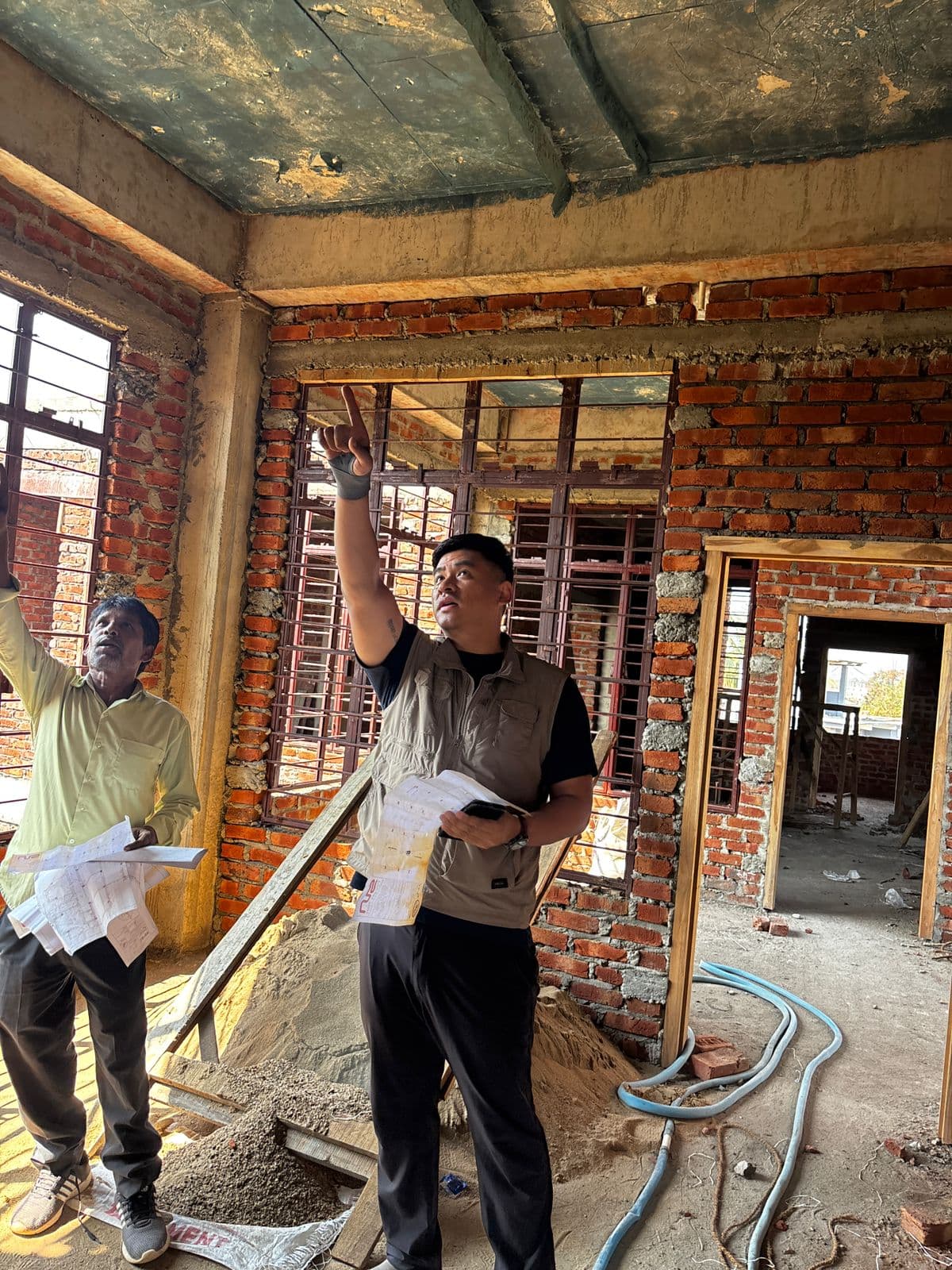
It has been active for decades, showing that there is an organised community and support network system.
Further, like any other state in India, Nagaland is steadily progressing towards modernisation, consequently creating opportunities where the responsibility to transform the urban fabric lies with architects and future architects.
(The interviewer is currently an intern at Eastern Mirror)