


101st ASPIRE workshop begins in Chümoukedima with focus on reflective education and professional teaching skills development.
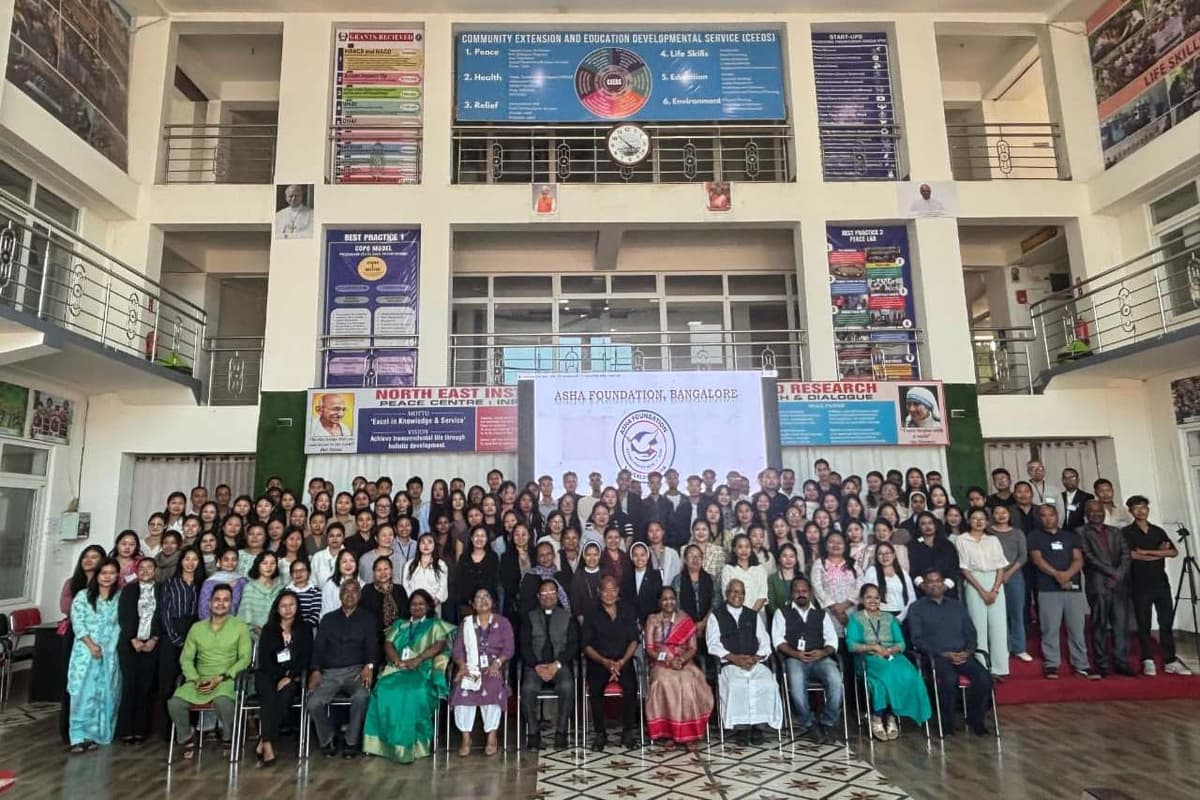
DIMAPUR — The 101st ASPIRE teachers training workshop on “Advancing skills for professional and peaceful instruction with reflective education” commenced on Thursday at the Peace Centre, 7th Mile, Chümoukedima.
The three-day programme is being organised by Peace Channel, in collaboration with ASHA Foundation, CEDOK, and the North East Institute of Social Sciences and Research (NEISSR), an update stated.
The workshop brought together 140 participants representing 42 schools, with the aim of strengthening professional competencies and promoting reflective and peaceful education practices.
It focuses on enhancing communication, classroom management, self-awareness, and student engagement while fostering inclusive and value-based learning environments.
Also read: FLNAT to be held at 860 centres in Nagaland
Delivering the welcome address, Rev. Dr. CP Anto, founder-principal of NEISSR and founder-director of Peace Channel, emphasised that education is not merely the transmission of knowledge but the transformation of lives.
Drawing from the meaning of education as “to draw out,” he highlighted the role of teachers as facilitators who nurture the potential within each child and contribute to building a peaceful society.
Referring to Charles Duhigg’s concept of “keystone habits,” he stressed that the daily habits of teachers shape classroom culture.
Rev. Anto encouraged educators to move from reaction to reflection, noting that such a shift can create trust, respect, and a positive learning environment. He further invited teachers to rediscover their purpose through the idea of Ikigai, where passion, skill, and societal need come together to give deeper meaning to the teaching profession.
Chief guest and District Education Officer of Chümoukedima, John Lotha, in his address emphasised the importance of peacebuilding, leadership, and adaptability in today’s educational landscape.
He called upon teachers to cultivate self-awareness, mutual respect, and a spirit of continuous learning, describing them as the backbone of the education system and key agents in shaping a responsible and harmonious society.
The programme also acknowledged the presence of Dr. Glory Alexander, founder and director of ASHA Foundation, and Rev. Fr. Mathew Thuniambral, member of the governing board.
The sessions are facilitated by expert resource persons including Hazel Leena George, Bethesa Jacob, Prof. Biju Sebastian, Maya Singh, and Jose V Abraham.
The first day featured interactive sessions on self-awareness, communication skills, adolescence, classroom management, and inclusive education.
The resource persons emphasised empathy, active listening, and understanding diverse learning needs to create a sense of belonging among students.
Highlighting Peace Channel’s renewed outreach, Rev. Anto announced an initiative to send trained educators to schools for 30 to 45 days to support teachers and strengthen school systems through life skills education, peace education, and career guidance.
He also noted that NEISSR, as a pioneering institution in the region, continues to contribute to professional education in social work and journalism while developing innovative models for peacebuilding.
Peace Channel and NEISSR, together with ASHA Foundation, are also planning to host similar programmes in other districts, expanding the reach of reflective and peace-oriented education initiatives, he informed.
The workshop will continue over the next two days with sessions aimed at equipping teachers to become reflective practitioners and promoters of peace in education.
“The conclave stands as a meaningful step towards empowering teachers to build not only better classrooms, but also a more peaceful and compassionate society,” it stated.