[caption id="attachment_177823" align="aligncenter" width="565"]
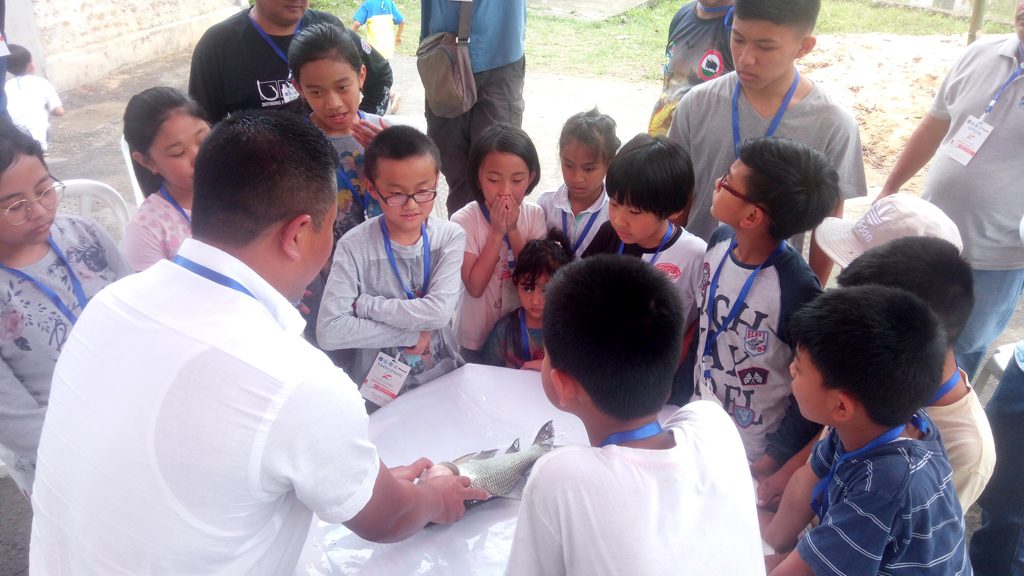 Assistant director for Fisheries, Dr. Vimezo Kire, educating the children about fish anatomy at the World Fish Migration Day programme at Lavi Lake in Dimapur.
[/caption]
Dimapur, April 21 (EMN): The Nagaland state department of Fisheries and a group of anglers called the Anglers Association Nagaland (AAN) set the ball rolling with a second 'World Fish Migration Day' programme on Saturday at Lavi Lake, located at Vihokhu village in Dimapur. The objective of the programme was to challenge the public to have a purpose of saving, protecting, and ensuring 'free migration for fish,' besides caring for the environment.
The World Fish Migration Day is an event to spread publicity about the importance of open rivers and migratory fish. It is coordinated by the World Fish Migration Foundation. On World Fish Migration Day organizations from around the world organize event around the common theme of connecting fish, rivers, and people. Many of these events are open to the public. By working together they create a greater driving force to raise awareness, share ideas and secure commitments.
For millennia, man has exploited the various ecosystem services which rivers provide. Sand and coal mining, water abstraction, power generation, the effluents; and use of poison, dynamite, and gill netting are some of many examples which carry a high environmental and ecological cost. With environmental impacts ranging from physical habitat degeneration, pollution, and the creation of in-stream barriers which interrupt natural flow patterns, the aquatic resources, with which we are blessed, are frequently abused beyond repair.
The mighty mahseer — or 'tiger of the water'— is one of the currently eight known species of mahseers in India contributes to inland fishery in a major way. They are one of the most threatened and heavily exploited groups of mega fishes. Unsustainable fishery, dynamite fishing, and habitat degradation through pollution and dams are some of the major threats faced by mahseers in Indian waters. Construction of large hydro power dams along with small irrigation dams has badly affected the mahseer population across the country. Building a wall across a river poses a major barrier in the pathways of species that migrate or undertake long distance movements, especially for breeding. They usually prefer cool, deep, and oxygen-rich waters in the main river channel but in the breeding season, they migrate upstream to the shallows.
During the programme, assistant director for department of Fisheries, Dr. Vimezo Kire, emphasized on the problems that are faced by the fishes in the rivers of Nagaland. He demurred about disposal of garbage in gutters, especially in hilly areas, as most of the gutter is connected with rivers. “A time will come when our kids will not know what existed in those rivers,” Kire cringed.
Kire also objected about the erection of several dams in the state, especially the Doyang hydro project as these activities ‘barricades’ the migratory path for the fishes. He theorised that if such structures are to be constructed, fish ladders are needed. He also said that if such projects are to be initiated then the concerned department must initially approach the Fisheries department or the Power department.
“In future if the department are bound to build such projects then the NGO like AAN should to come and intervene it,” Kire told the gathering.
Many people may not realise the important role that anglers play in monitoring and caring for our waterways and fish stocks. Anglers are natural custodians for these important natural resources. They spend much of their free time on the water so they are often the first to observe changes within the natural environment. This creates a strong motivation for anglers to become involved in ensuring that they are appropriately managed. In many areas across the world, anglers are becoming increasingly involved in monitoring programmes to tract the ongoing health of our waterways and project to arrest and reverse environmental decline.
They perform an important function in lobby government for improved management of our fish and water resources, offering a voice of caution regarding potential harmful development proposals. They also aid researchers in understanding the fish population and species. In fact, more new species have been discovered by the anglers.


