


AIDA conducted a life skills programme for 226 students and a stakeholder engagement event in Dimapur and Chümoukedima
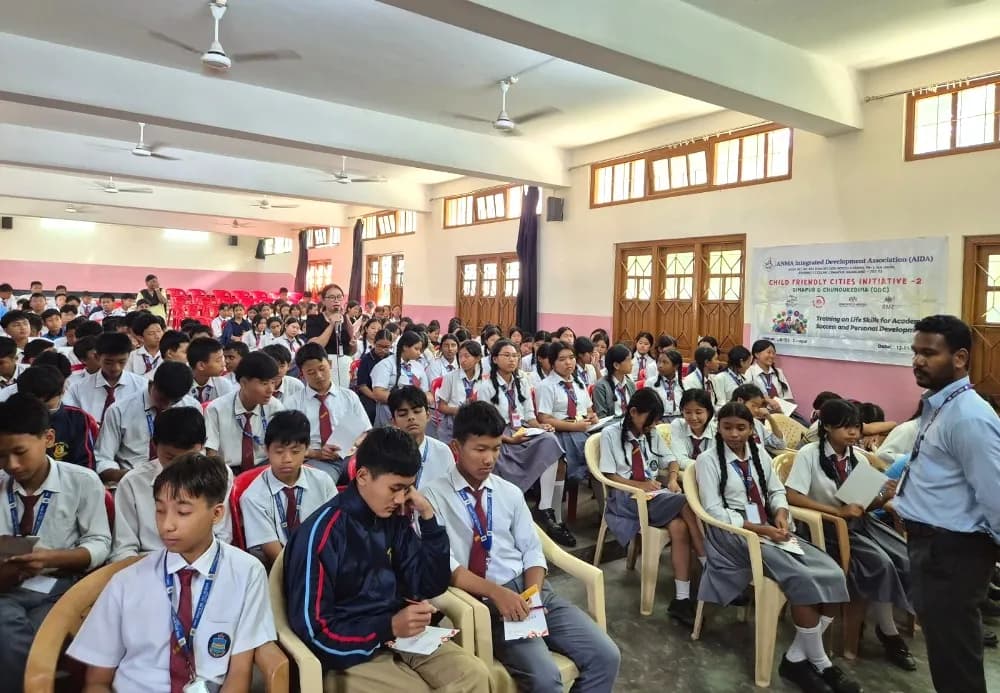
DIMAPUR — The ANMA Integrated Development Association (AIDA), Don Bosco, Dimapur, under the Child-Friendly Cities Initiative Phase 2 Dimapur and Chümoukedima (CFCI-2 D&C), conducted two engagements on November 12 and 13 focusing on children's empowerment and stakeholder collaboration towards sustainable child-friendly communities.
On November 12, AIDA CFCI-2 D&C organised a Life Skills Development Programme on “Academic Success and Personal Development” for 226 students, including 110 girls and 116 boys, of Don Bosco Higher Secondary School and Evershine High School, Dimapur.
According to a press release, the programme aimed to strengthen children's leadership, confidence, and personal development while equipping them with essential life skills for academic and personal growth.
The sessions covered self-discipline, time management, goal setting, positive thinking, self-confidence, decision-making, concentration, and effective study habits.
Facilitated by children mobiliser officers Toli Z Asumi and Livi Lea, and civil society mobiliser officers William Kullu and Livino S Zhimo from the Project CFCI Phase 2 team, the programme involved interactive discussions, practical activities, and experience-sharing.
On November 13, AIDA CFCI-2 D&C organised a Stakeholder Engagement Event for Sustainability at AIDA's Conference Hall, Dimapur, on the theme “Towards Sustainable Child-Friendly Communities Through Collective Action”.
The event brought together 13 participants representing government departments, NGOs, youth organisations, civil society organisations (CSOs), and educational institutions to strengthen partnerships and promote collective responsibility for sustaining child-friendly initiatives.
Addressing the gathering, Rev. Fr. Dr. Roy George, SDB, Executive Director of AIDA, highlighted the importance and relevance of CFCI Phase 2, particularly in the growing urban centres of Dimapur and Chümoukedima. He stated that building child-friendly cities requires sustained stakeholder engagement, institutional collaboration, and shared commitment during and beyond the project period.
Lanthou Mark Gonmei presented an overview of CFCI Phase 2, highlighting its objectives, key intervention areas, and annual events and activity plan for 2026–2029.
William Kullu briefed participants on the objectives of the engagement, stressing stakeholder ownership, collaboration, and concrete commitments towards sustainability.
Following the presentations, participants discussed the proposed 2026 activity plan and agreed to organise a Child Rights Convention and Community Fair (Mela) on Children’s Rights during December 2026.
The Child-Friendly Cities Initiative Phase 2 is a rights-based development project implemented by AIDA, Don Bosco, in Dimapur and Chümoukedima districts of Nagaland, in partnership with the Don Bosco National Forum for the Young at Risk, New Delhi, with support from Don Bosco Mondo e.V., Germany.