


Padma Shri awardee Guru Sangyusang Pongener hopes to establish a cultural academy to preserve Naga traditions.
DIMAPUR — Fresh from receiving the Padma Shri 2026, noted Ao cultural custodian Guru Sangyusang Pongener returned to Nagaland on Thursday to a warm reception at Dimapur Airport, where he dedicated the prestigious honour to the people of the state and reaffirmed his commitment to preserving and passing on Naga cultural traditions to future generations.
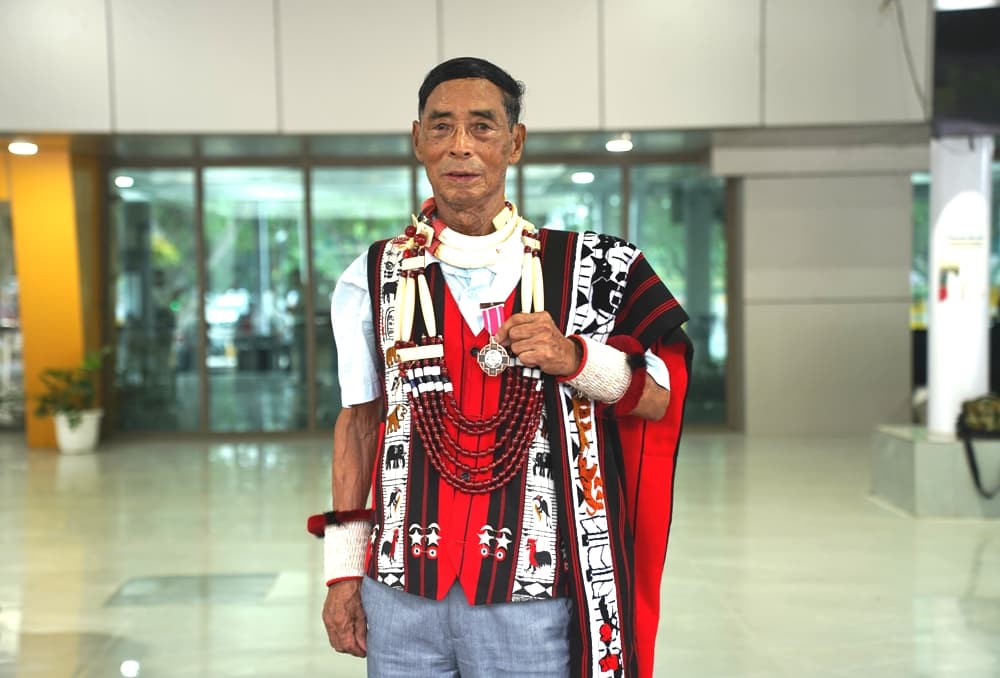
Pongener, one of Nagaland's foremost custodians of indigenous culture, was conferred the Padma Shri in recognition of his outstanding contribution to the preservation and promotion of Ao Naga folk arts and traditions.
He received the award during the second Civil Investiture Ceremony held at Ganatantra Mandap, Rashtrapati Bhavan, New Delhi, on June 23.
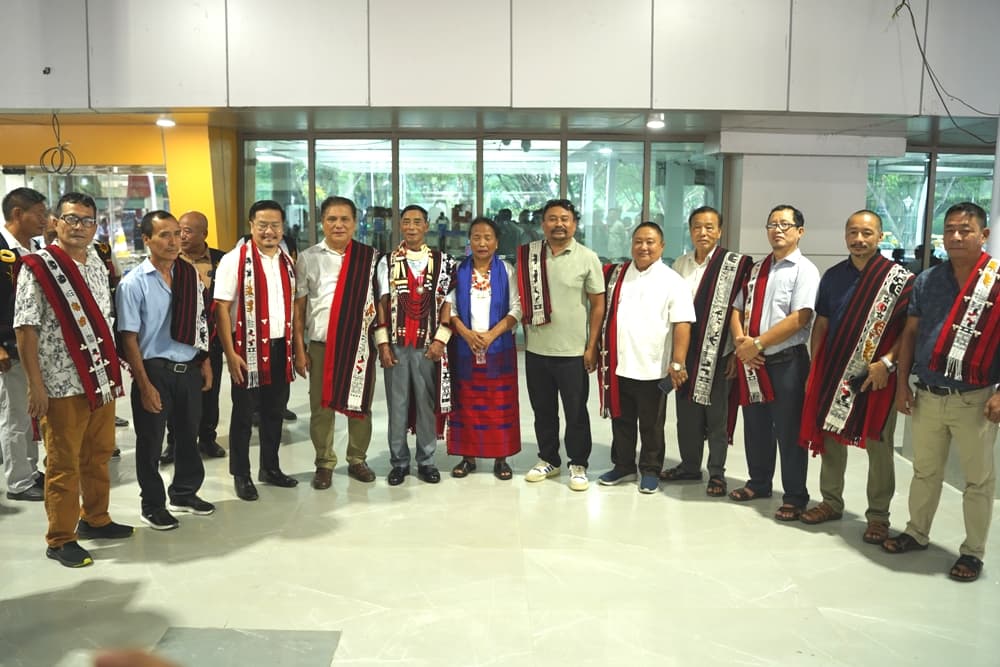
On his arrival at Dimapur Airport, Pongener was welcomed by members of Ungma Senso Telongjem Dimapur, Ongpangkong Senso Telongjem Dimapur, Ungmatsur Senso Telongjem Dimapur, Tongpok Semchir Pongen Mundang Dimapur and Soyim Students' Union Dimapur.
Speaking to media persons, Pongener expressed gratitude to the government of India, Nagaland government and all those who supported him throughout his journey.
Also read: Rio congratulates Padma Shri awardee Guru Sangyusang Pongener
He dedicated the award to the people of Nagaland and said that the honour would inspire him to continue promoting and preserving indigenous cultural heritage.
He also thanked the chief secretary, the department of Art and Culture, Ao Senden, Watsu Mungdang, various tribal organisations and the former deputy commissioner of Mokokchung for their support. Above all, he said, the recognition was possible through the grace of God.
Recalling his childhood, Pongener said that his passion for preserving Ao culture began at an early age.
Inspired by village elders, his forefathers and especially his father, he learned traditional folk songs, dances and customs that were passed down orally through generations.
As he grew older, he realised that the knowledge should not remain with him alone and felt a responsibility to pass it on to younger generations.
Driven by that vision, he and a group of friends established the Naga Wadir Club, dedicated to safeguarding indigenous heritage.
WATCH MORE:
Through the organisation, they travelled across the country showcasing Naga culture at festivals and cultural events.
Pongener said that the group's efforts received recognition from various governments and institutions over the years, culminating in the Padma Shri honour.
Expressing concern over the gradual decline of traditional practices among the younger generation, he said that preserving Ao identity had always been his life's mission and assured that his doors would remain open to any young person wishing to learn about their traditions.
On documenting oral traditions and folklore in written form, Pongener shared that he had learnt the traditions through oral transmission and continued to teach them in the same manner.
"When I was learning these traditions, I faced many hardships. Everything was passed down orally, and I have memorised and preserved it in my heart. I continue to teach these traditions orally, and they have benefited many people," he said.
Looking ahead, Pongener expressed hopes of establishing a cultural academy where young people can learn traditional songs, dances, folklore and cultural practices.
He added that financial assistance from the government would help turn the vision into reality, saying that such an initiative would be difficult to undertake on his own.
Responding to a question on the proper use of traditional Naga attire, Pongener stressed that traditional clothing is an integral part of Naga identity and should be worn with understanding and respect.
"The younger generation should know the significance of every garment, its name, its meaning and the correct way to wear it," he said.