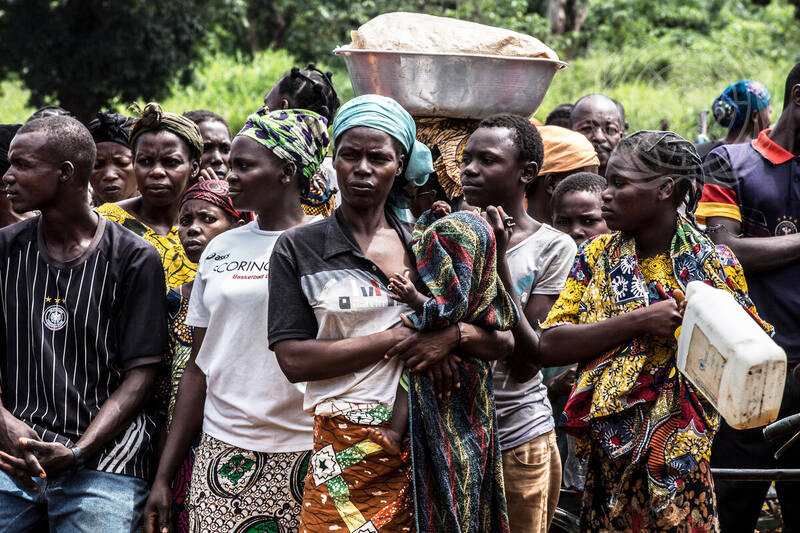
82.1 million people in East, Central Africa face food insecu
82.1 million people in East, Central Africa face food insecurity
Food and Agriculture Organisation of the United Nations stated that an estimated 82.1 million people in East and Central Africa are currently food insecure and in urgent need of humanitarian assistance
NAIROBI — An estimated 82.1 million people in East and Central Africa are
currently food insecure and in urgent need of humanitarian assistance, the Food
and Agriculture Organisation of the United Nations (FAO) and the
Intergovernmental Authority on Development (IGAD) said in a statement.
The agencies said more than 53.1 million of those
affected are in seven of the eight IGAD member states: Djibouti, Ethiopia,
Kenya, Somalia, South Sudan, Sudan and Uganda.
Other affected countries include Tanzania, the Central
African Republic, the Democratic Republic of the Congo (DRC) and Burundi.
The two agencies attributed the surge in food insecurity
to climate shocks and increasing conflicts in the region.
"Extreme weather events, escalating conflict in
various areas, macroeconomic challenges, and widespread displacement remain the
main drivers of acute food insecurity in the region," the statement said,
noting that Sudan and the DRC remain among the world's most food-insecure
countries.
According to the FAO and IGAD, 25.5 million people in the
DRC are facing high levels of acute food insecurity. This includes displaced
populations and returnees, particularly in North Kivu, Ituri, South Kivu and
Tanganyika provinces, who are most affected due to prolonged conflict.
Similarly, in Sudan, 24.6 million people are highly food
insecure, according to the statement, Xinhua news agency reported.
The agencies warned that the crisis could worsen in the
coming months due to the ongoing La Nina phenomenon, which is expected to
persist in the near term, with a likely transition to El Nino by May 2025. They
called for immediate, coordinated and multi-sectoral lifesaving assistance in
areas experiencing the most severe levels of acute food insecurity.
Africa is highly vulnerable to the impacts of climate
change, with rising temperatures, changing rainfall patterns, and extreme
weather events affecting various regions, impacting ecosystems and livelihoods,
increasing water scarcity and contributing to desertification. It can lead to
reduced crop yields, threatening the livelihoods of many who depend on
agriculture. Adaptation strategies are crucial for building resilience in the
agricultural sector.
According to the United Nations, Africa faces a
significant burden from climate change, with countries losing 2-5 per cent of
GDP and diverting up to 9 per cent of their budgets for climate responses. In
sub-Saharan Africa, adaptation costs could reach $30-50 billion annually over
the next decade, or 2-3 per cent of the region's GDP. By 2030, up to 118
million extremely poor people may be exposed to droughts, floods, and extreme
heat, hindering poverty alleviation and economic growth.