


A 6.7 magnitude earthquake shook part of central Indonesia's Sulawesi island on Tuesday.
Share


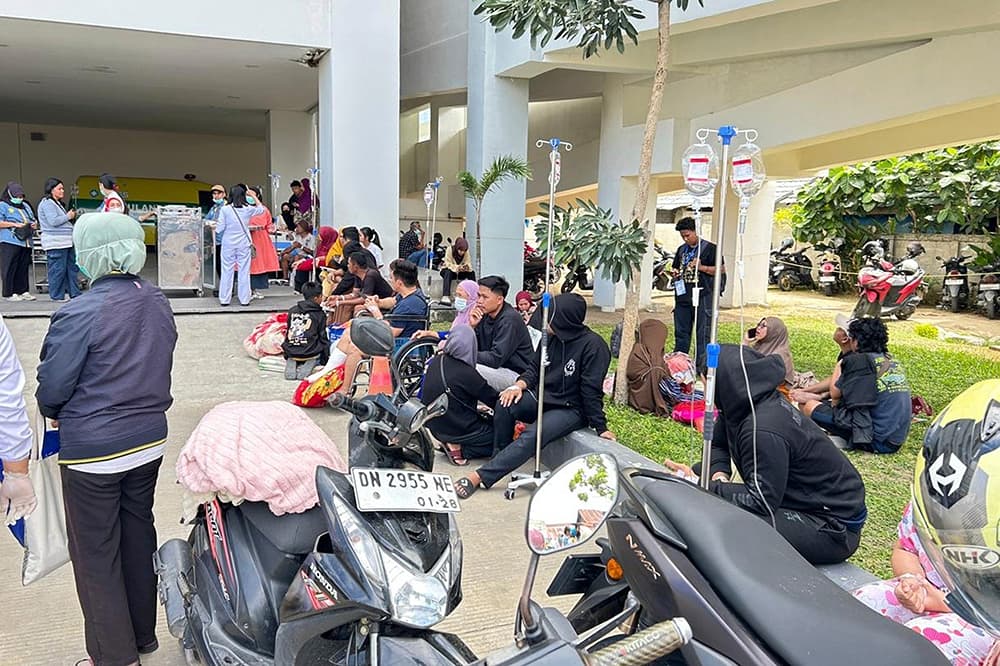
PALU — A 6.7 magnitude earthquake shook part of central Indonesia's Sulawesi island on Tuesday, injuring dozens of people, damaging homes and infrastructure and rattling residents of a city devastated by a quake and tsunami eight years ago, officials said.
The initial quake was centred inland about 43 kilometres east-southeast of Palu, and the US Geological Survey said it was about 10 kilometres deep.
The strong shaking sent people fleeing into open areas in and around Palu, a city of about 400,000 people and the capital of Central Sulawesi province. Several hospitals evacuated patients, some with IV drips, outdoors as a safety measure.
Four regencies close to the epicentre — with a combined population of 1.3 million — have yet to be fully assessed, but a preliminary report said at least 109 people have been displaced by the powerful earthquake. At the same time, 32 people were reported injured and rushed to a nearby hospital, including eight with serious injuries in the hardest hit Sigi regency, according to Abdul Muhari, the National Disaster Management Agency's spokesperson.
He said the earthquake also caused widespread damage to buildings and infrastructure, including 64 houses, four places of worship, four public facilities, two bridges, two government office buildings, a cafe and a hotel. A section of a provincial road linking Palu city and its neighbouring regencies of Sigi and Poso was cut.
The agency also said that at least 55 aftershocks continued throughout the day, raising concerns among residents shaken by memories of a devastating 2018 earthquake and tsunami in the region. The aftershocks prompted residents to flee buildings and gather in open areas.
Images from the area showed heavily damaged structures with partially collapsed roofs, shattered walls and debris scattered across the streets.
“We have evacuated all guests from the hotel, including several guests who remained in their rooms,” said Effendi Natali, a general manager of a four-star hotel in Palu.
“They all panicked, which is a natural reaction during an earthquake, but everyone is safe,” Natali said, adding that the hotel sustained only minor damage.
People also moved away from coastal areas as a precaution in case the quake set off a tsunami. Indonesia's Meteorology, Climatology and Geophysical Agency said there was no danger of a tsunami but warned aftershocks could continue.
“The earthquake shaking was extremely strong,” Palu resident Muhtar Ahmad said. “We are still traumatised by the previous earthquake, so we chose to remain outside because we are afraid that aftershocks may continue.”
Many Sulawesi residents are haunted by the magnitude 7.5 earthquake that devastated Palu in 2018, setting off a 3-metre high tsunami and a phenomenon called liquefaction in which soil collapses into itself. More than 4,000 people were killed, including many who were buried when whole neighbourhoods were swallowed in the falling ground.
In January 2021, a magnitude 6.2 earthquake near the city of Mamuju on Sulawesi island left at least 100 people dead, with thousands sleeping outdoors for days out of fear of aftershocks.
Indonesia, a vast archipelago of more than 17,000 islands, is prone to earthquakes and volcanic activity because of its location on the “Ring of Fire,” an arc of volcanoes and fault lines in the Pacific Basin.