 Guwahati, July 6 (IANS):
 With reports of 49 deaths and 190 positive cases of Japanese Encephalitis (JE), the Assam government has kept on hold leaves for all doctors and paramedical staff across the state, Health Minister Himanta Biswa Sarma said on Saturday.
Sarma said that any kind of emergency leave will however, be granted only with the prior approval of the Deputy Commissioners (DC).
"Unauthorised absence from the place of posting even after duty hours will be treated seriously amounting to criminal dereliction of duty," he said, adding that all Additional Deputy Commissioners, Joint Director (JD), District Medical Officer (DMO) will compulsorily tour affected areas regularly along with visiting of at least two hospitals per week
The Minister has also instructed the state's Principal Secretary, Department of Health and Family Welfare, to hold a weekly review conference with all DCs and JDs to ensure the vigil continues.
According to Sarma, the 49 deaths were reported from January till July 5. He said that the state was currently undergoing a transmission season for JE, adding that all the districts of Assam except Kokrajhar are currently under the influence of the virus.
The Minister said that the situation was under close watch and all preventive measures were being taken.
"The vaccination for JE through the routine immunization for children is currently going on regularly. Realizing the importance of adult vaccination was done in 20 districts during 2016-17 where the coverage was about 68 per cent," he said adding that there is a need for adult vaccination mop up to prevent the outbreak in all the remaining districts.
Giving details about the state's response to deal with the crisis, Sarma said that 12.8 lakhs blood slides have been collected and diagnostic services for JE were already available in all district hospitals and medical colleges.
"After the identification of JE cases, the affected areas are covered extensively for awareness generation, intensified fogging operation. A total of 1,094 effected villages have been covered through intensified fogging operations already."
What is Japanese encephalitis virus?
Japanese encephalitis virus (JEV) is a mosquito-borne flavivirus, and belongs to the same genus as dengue, yellow fever and West Nile viruses.
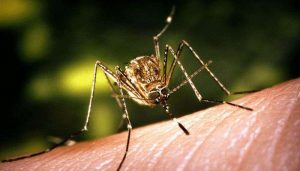
It is a zoonosis – an animal disease that can spread to humans – primarily transmitted by evening biting Culex
mosquitoes that feed on infected birds, pigs and other mammals passing the infection to humans living and working in rural areas around rice paddies and irrigation systems.
Signs and symptoms
Most JEV infections are mild (fever and headache) or without apparent symptoms, but approximately 1 in 250 infections results in severe clinical illness. The incubation period is between 4-14 days. In children, gastrointestinal pain and vomiting may be the dominant initial symptoms. Severe disease is characterized by rapid onset of high fever, headache, neck stiffness, disorientation, coma, seizures, spastic paralysis and ultimately death. The case-fatality rate can be as high as 30% among those with disease symptoms.
Of those who survive, 20%–30% suffer permanent intellectual, behavioural or neurological sequelae such as paralysis, recurrent seizures or the inability to speak.
JEV is transmitted to humans through bites from infected mosquitoes of the Culex species (mainly Culex tritaeniorhynchus). Humans, once infected, do not develop sufficient viraemia to infect feeding mosquitoes. The virus exists in a transmission cycle between mosquitoes, pigs and/or water birds (enzootic cycle). The disease is predominantly found in rural and periurban settings, where humans live in closer proximity to these vertebrate hosts.
In most temperate areas of Asia, JEV is transmitted mainly during the warm season, when large epidemics can occur. In the tropics and subtropics, transmission can occur year-round but often intensifies during the rainy season and pre-harvest period in rice-cultivating regions.
There is no antiviral treatment for patients with JE. Treatment is supportive to relieve symptoms and stabilize the patient.
Safe and effective JE vaccines are available to prevent disease. WHO recommends having strong JE prevention and control activities, including JE immunization in all regions where the disease is a recognized public health priority, along with strengthening surveillance and reporting mechanisms. Even if the number of JE-confirmed cases is low, vaccination should be considered where there is a suitable environment for JE virus transmission. There is little evidence to support a reduction in JE disease burden from interventions other than the vaccination of humans. Thus, vaccination of humans should be prioritized over vaccination of pigs and mosquito control measures.
There are four main types of JE vaccines currently in use: inactivated mouse brain-derived vaccines, inactivated Vero cell-derived vaccines, live attenuated vaccines, and live recombinant (chimeric) vaccines. (Source: WHO)


