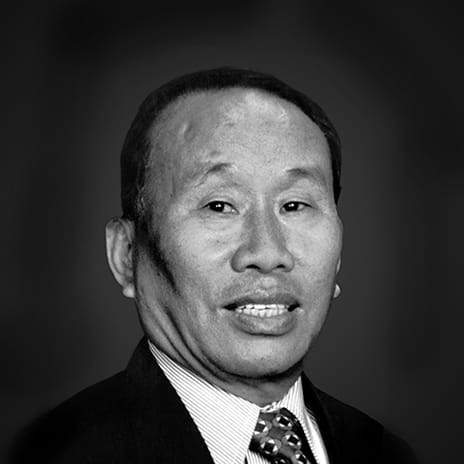
DIMAPUR — Former Nagaland minister Lt. TCK
Lotha's 25th death anniversary was observed with a prayer service at his former
official residence in Kohima, followed by a commemorative gathering and
dedicatory prayer at his native village, Tsungiki, in Wokha district, on April
4.
According to an update as part of the observance, his
remains were exhumed from Kohima and brought to Tsungiki village for a special
prayer service. From there, they were taken to Chukitong Ground, Wokha, where a
final memorial ceremony was held.
It was attended by family members, public leaders, and
representatives of various organisations, who delivered speeches, shared
memories, and offered words of tribute. He was then finally laid to rest at the
newly constructed resting place at Mmhorü Jüsü, Tsungiki.
The event was also attended by Shürhozelie Liezietsu, former
Chief Minister of Nagaland; MLA Achumbemo Kikon; MLA Y Mhonbemo Humtsoe; and
former MLA Mhonlumo Kikon, besides other dignitaries.
On behalf of the family, Abeni TCK and T Thechamo Kikon
addressed the gathering, expressing gratitude and remembrance. Representatives
of various organisations also spoke during the ceremony, including Mhondamo
Ovung, chairman of the Lotha Hoho; Orenthung Lotha, chairman of the Lotha
Officers’ Association; Lironthung Kithan of the Lotha Students’ Union;
Yanrenthung Kikon of the Kikon Shentsüta Ekhüng; Renbomo Lotha, chairman of the
Chukitong Range Public Organisation; T Janthungo Kikon, chairman of the
Tsungiki Village Council; and Khumkhothung Ngullie, who spoke on behalf of the
in-laws.
Born in 1934 to Thungyamo and Zubeni Lotha, late TCK Lotha
was the first Indian Administrative Service (IAS) officer from the Lotha
community, joining the Uttar Pradesh cadre in 1964. Throughout his career, he
held several important administrative positions, culminating in his appointment
as the Chief Secretary of Nagaland—a role he held until his retirement in 1997.
It was mentioned that, renowned for his calm leadership
during turbulent times, particularly amid the challenges of insurgency in the
1990s, he was instrumental in resolving complex border and village conflicts.
His efforts earned him national recognition, including the Jawaharlal Nehru
Excellence Award (1994), the Rajiv Gandhi Excellence Award (1994), and the
Shiromani Award (1996).
In 1998, he was elected unopposed from the 37 Tiyi
Constituency and was appointed Minister for Tourism and Border Affairs. He
passed away while in office on February 3, 2000, at the age of 65.