


The Indian bison has been photographed for the first time through camera traps in Manipur’s Kamjong district.
Share


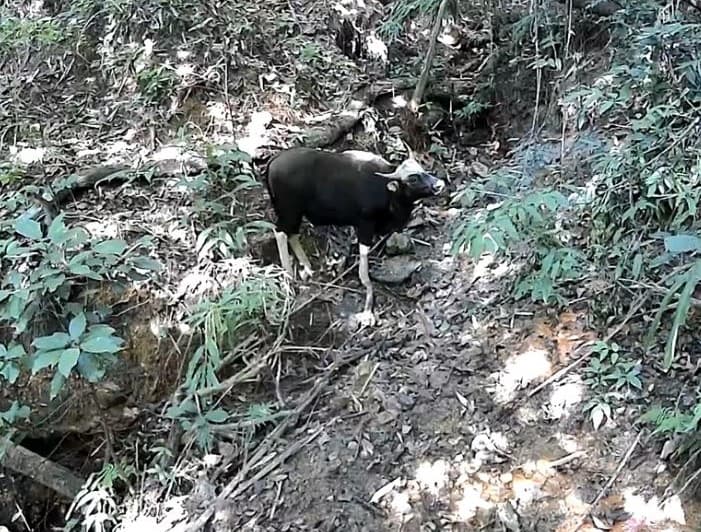
IMPHAL — The Indian bison (wild buffalo) or Lamsan in local dialect has been photographed for the first time through camera traps in Manipur’s Kamjong district.
The rare and significant record was made at Nongman village in Kamjong district, where camera traps installed by ENFOGAL—a local environment NGO successfully captured images of the species.
The Indian bison, the largest wild bovine species in the world, is listed as ‘Vulnerable’ on the IUCN Red List due to persistent threats such as habitat destruction, hunting, and fragmentation of forest landscapes.
Its confirmed presence in Manipur not only enriches the state’s biodiversity records but also underscores the urgent need for strengthened conservation measures in the region.
Also read: 7 held in Assam for circulating content on child abuse, sexual exploitation
The camera traps were set up with support of IdeaWild, an USA based international organisation, as part of ENFOGAL’s ongoing project to document wildlife diversity in Ukhrul and Kamjong districts and to promote conservation awareness among local communities, according to a functionary of ENFOGAL.
"We're taking up this initiative apart from other environmental issues," said Patrick of ENFOGAL.
"The first-ever camera-trap record of Indian bison in Manipur confirms the ecological significance of community forests in the eastern hills and highlights the urgent need for community-led conservation to safeguard remaining bison habitats.”
Nongman village is also known to harbour other significant wildlife species and further demonstrate its ecological importance.
Following the confirmation of the Indian bison’s presence, the village community is likely to take a decision to safeguard the species and its habitat.
Lamsan (Indian bison) have been reported visiting the natural salt lick of Rajai village from across Burma since the last twenty years, a forest official said when contacted.